


The decentralized finance industry continues to revolutionize the global financial landscape by offering permissionless lending, borrowing, staking, and yield-generation opportunities. However, despite significant advancements in blockchain security, governance-related vulnerabilities remain one of the most challenging threats facing DeFi protocols. A recent example is the Ethereum DeFi Protocol Term Finance Hit by $8.5M Governance Attack, an incident that has reignited discussions about the security of decentralized governance systems and the risks associated with token-based voting mechanisms.
Term Finance, a fixed-rate lending protocol built on Ethereum, became the latest victim of a sophisticated governance exploit that resulted in approximately $8.5 million in losses. Unlike traditional smart contract hacks that exploit coding vulnerabilities, this incident leveraged the protocol’s governance framework itself. The attacker reportedly acquired sufficient voting power to pass malicious proposals and gain control over critical vault functions, enabling the unauthorized withdrawal of millions of dollars worth of assets. Security researchers estimated that around 2,843 ETH and 1.68 million USDC were drained from the affected vaults.
This attack serves as a powerful reminder that DeFi governance security, Ethereum lending protocols, DAO voting systems, and crypto asset protection are just as important as smart contract audits. As decentralized finance grows in complexity and adoption, governance attacks may become one of the industry’s most significant threats.
Term Finance and Its Role in DeFi
Term Finance is an Ethereum-based protocol designed to provide fixed-rate lending and borrowing services. Unlike traditional DeFi lending platforms that rely on floating interest rates, Term Finance allows users to lock in borrowing costs and lending returns for a predetermined period.
The protocol gained attention for offering more predictable lending conditions compared to variable-rate platforms. Through its vault infrastructure, users could deposit assets and earn returns generated from lending activities across multiple integrated strategies.
The platform’s architecture relied heavily on governance mechanisms that allowed token holders to participate in protocol decision-making. This governance structure was intended to create a decentralized environment where stakeholders could collectively determine the future direction of the protocol. However, as the recent incident demonstrated, governance systems can become significant attack vectors when voting power becomes concentrated in the hands of malicious actors.
What Happened During the $8.5 Million Governance Attack?
The governance attack on Term Finance differed substantially from typical DeFi exploits. Instead of exploiting a coding flaw, the attacker manipulated the governance process itself.
According to blockchain security firms, the attacker obtained sufficient governance voting power and successfully pushed through proposals that granted control over critical vault operations. Once the proposals were approved, assets held within the protocol’s strategy vaults were transferred to wallets controlled by the attacker. The stolen assets included approximately 2,843 ETH and 1.68 million USDC, bringing the total losses close to $8.5 million.
Reports indicate that the attack targeted Term Finance’s Meta Vaults, which managed a significant portion of the protocol’s deposited assets. The incident resulted in nearly 68% of the vault assets being drained, creating substantial financial losses for affected users.
The event demonstrated how attackers can exploit weaknesses in DAO governance models, token voting systems, and on-chain governance frameworks without directly attacking the underlying smart contracts.
How Governance Attacks Work in DeFi
The Concept of Governance Voting
Most decentralized finance protocols operate through governance tokens. These tokens grant holders voting rights on proposals related to protocol upgrades, treasury management, risk parameters, and operational decisions.
The underlying philosophy is straightforward: those who own the protocol should help govern it. However, governance systems become vulnerable when voting power can be accumulated cheaply or concentrated among a small number of participants.
In the case of Term Finance, reports suggest the attacker acquired enough voting influence to effectively control governance outcomes. Once majority control was achieved, malicious proposals could be approved using legitimate protocol mechanisms.
Why Governance Attacks Are Dangerous
Governance attacks are particularly dangerous because they often appear legitimate from a technical perspective. Smart contracts execute approved proposals exactly as designed.
This creates a unique challenge for DeFi security teams. Traditional security audits focus on identifying coding flaws, but governance attacks exploit economic and organizational weaknesses rather than software bugs.
As a result, protocols with well-audited code can still suffer catastrophic losses if their governance structures are not adequately protected.
The Role of Voting Power in the Exploit
One of the most alarming aspects of the Term Finance incident was the apparent ease with which governance control was obtained.
Security reports indicate that the attacker acquired a controlling share of governance voting power before initiating the exploit. Once this threshold was reached, proposals could be introduced and approved without significant resistance from other stakeholders.
This highlights a recurring issue across decentralized finance ecosystems. When governance participation is low and voting tokens are thinly distributed, attackers may find it economically viable to accumulate sufficient influence to compromise protocol security.
The Term Finance exploit demonstrates how governance token concentration, voter apathy, and low participation rates can create systemic vulnerabilities.
Why Existing Security Measures Failed
Timelock Mechanisms
Many DeFi protocols implement timelocks to delay the execution of governance proposals. These delays are designed to provide users with sufficient time to review proposals and react to potentially malicious actions.
Term Finance reportedly utilized timelock protections and veto mechanisms intended to prevent unauthorized governance changes. However, these safeguards ultimately failed to stop the attack.
Governance Oversight Limitations
Governance protections are only effective when community members actively monitor and participate in voting processes.
Several reports suggest that the attacker leveraged governance permissions to bypass existing safeguards. The incident illustrates that even sophisticated governance systems can become ineffective when stakeholders fail to engage in protocol oversight.
The attack exposed weaknesses in decentralized governance monitoring, community participation, and on-chain proposal review processes.
Impact on Ethereum DeFi Ecosystem
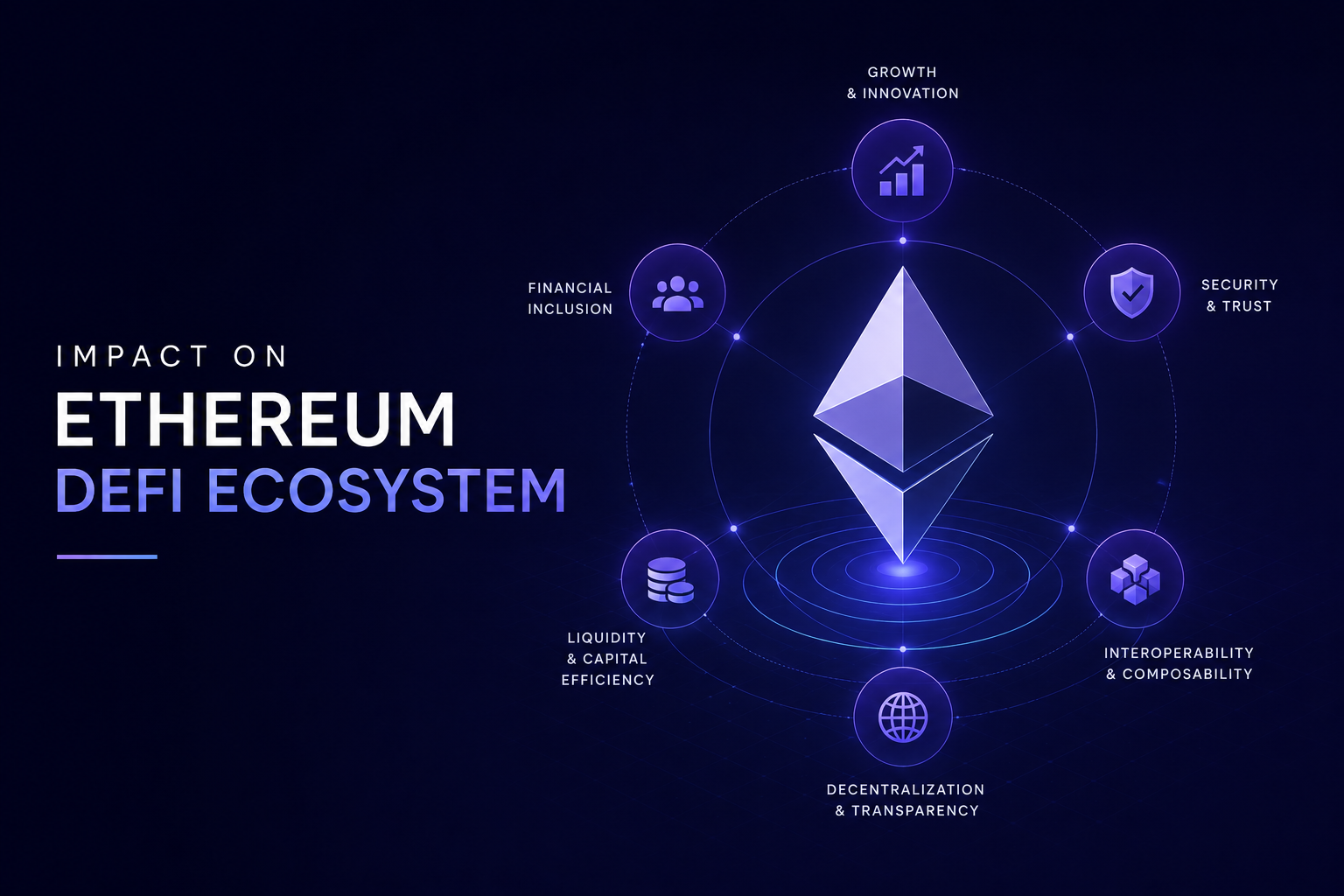
The consequences of the Term Finance exploit extend beyond the protocol itself.
Every major governance attack affects broader market confidence in decentralized finance. Investors and users often view these incidents as indicators of systemic risk, leading to reduced participation and increased caution across the industry.
The exploit also reinforces concerns surrounding the sustainability of governance-token-based security models. As more capital flows into DeFi, attackers gain stronger incentives to target governance systems rather than attempting technically complex smart contract exploits.
For Ethereum-based lending protocols, this incident serves as another reminder that governance security must evolve alongside technological innovation.
Term Finance’s Response to the Incident
Following the attack, Term Finance acknowledged the governance exploit and began investigating the incident.
The protocol reportedly shut down Meta Vault deposits and revoked governance-related permissions associated with the affected infrastructure. These emergency actions were implemented to prevent additional losses and limit further damage. Withdrawals for users remained available while investigations continued.
The team also initiated collaboration with blockchain security firms and forensic investigators to track stolen assets and assess potential recovery options.
Although recovery remains uncertain, the response reflects the growing maturity of DeFi incident management practices.
Lessons for DeFi Protocol Developers
The Term Finance governance attack offers several important lessons for developers and protocol operators.
First, governance design must receive the same level of scrutiny as smart contract code. Protocols should regularly assess voting power distribution and identify potential concentration risks.
Second, governance participation incentives may need to be strengthened. Low voter turnout can significantly weaken decentralized oversight and make attacks easier to execute.
Third, protocols should consider implementing additional safeguards such as multi-layer governance approvals, emergency pause mechanisms, delegated monitoring systems, and enhanced proposal review requirements.
These measures can reduce the likelihood of successful governance takeovers while preserving decentralization.
Lessons for Crypto Investors
Investors often focus on yield opportunities without fully evaluating governance risks.
The Term Finance incident demonstrates why users should analyze governance structures before depositing assets into DeFi platforms. Factors such as token distribution, voting participation rates, timelock effectiveness, and governance transparency can significantly influence protocol security.
Understanding DeFi risk management, crypto governance security, smart contract audits, and protocol decentralization is becoming increasingly important for anyone participating in decentralized finance.
Investors should also diversify exposure across multiple protocols rather than concentrating assets in a single platform.
The Future of Governance Security in DeFi
Governance attacks are likely to become more common as decentralized finance continues to mature.
Attackers increasingly recognize that manipulating governance systems can be more profitable and less technically demanding than exploiting smart contract vulnerabilities. As a result, future DeFi security frameworks will need to focus heavily on governance resilience.
Emerging solutions may include advanced voting models, reputation-based governance, quadratic voting systems, delegated oversight councils, and AI-powered governance monitoring tools.
Industry-wide adoption of stronger governance standards could significantly reduce the likelihood of future incidents similar to the Term Finance exploit.
The broader Ethereum ecosystem is expected to prioritize governance security as one of the key challenges facing decentralized finance over the coming years.
Conclusion
The Ethereum DeFi Protocol Term Finance Hit by $8.5M Governance Attack serves as one of the most significant governance-related incidents of 2026. Rather than exploiting a coding flaw, the attacker leveraged governance control to authorize the movement of approximately $8.5 million in assets from protocol vaults. The incident highlights the growing importance of governance security within decentralized finance and demonstrates that smart contract audits alone are no longer sufficient.
As DeFi continues expanding, protocols must strengthen governance frameworks, improve voter participation, and implement additional layers of protection against hostile takeovers. For investors, the event underscores the importance of evaluating governance structures alongside yields and technical features. Ultimately, the future success of decentralized finance will depend not only on secure code but also on secure governance.

1 Comment
Pingback: Internet Computer (ICP): Complete Guide, Uses & Future