

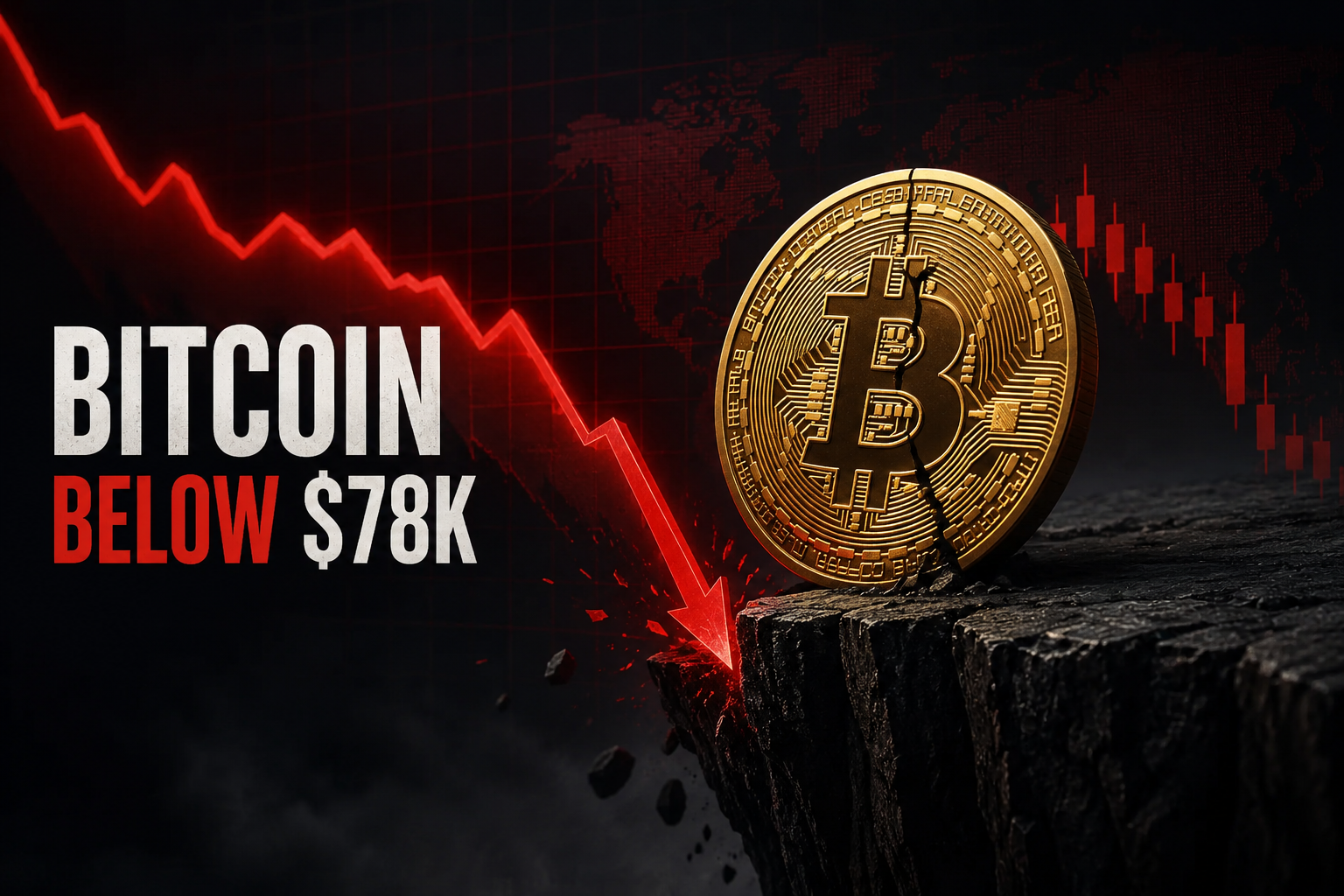

Bitcoin has once again found itself at the center of global financial discussions after falling below the $78,000 mark following heightened geopolitical tensions in the Middle East. The decline came after reports of U.S. military strikes on Iranian targets, an event that triggered a wave of uncertainty across global markets. Investors reacted quickly, leading to increased volatility in stocks, commodities, and cryptocurrencies alike. While the sudden drop sparked concerns among traders, many market analysts argue that the pullback is a normal and healthy part of Bitcoin’s ongoing market cycle rather than the beginning of a prolonged downturn.
The cryptocurrency market has historically been sensitive to macroeconomic developments and geopolitical events. Whenever uncertainty rises, investors tend to reduce exposure to risk assets, and Bitcoin often experiences short-term selling pressure. However, seasoned analysts point out that corrections are a natural feature of bullish markets and often help establish stronger foundations for future price appreciation.
This latest decline has prompted investors to reassess market conditions, evaluate key support levels, and consider whether Bitcoin’s long-term outlook remains intact. Understanding the factors behind the recent price movement is essential for anyone following the crypto market or considering future investment opportunities.
Why Bitcoin Fell Below $78K
The primary catalyst behind Bitcoin’s decline was the increased geopolitical uncertainty resulting from U.S. military action involving Iran. Financial markets generally dislike uncertainty, and investors often react by reducing exposure to assets perceived as risky. Cryptocurrencies, despite their growing adoption, still fall into the high-risk asset category for many institutional investors.
As news of the strikes spread, traders moved capital into traditional safe-haven assets such as gold and government bonds. This shift triggered selling pressure across the crypto market, causing Bitcoin to drop below key psychological levels. Reports indicated that Bitcoin briefly traded under $78,000 while other major cryptocurrencies experienced even steeper losses.
The market reaction was amplified by leveraged positions. When prices decline rapidly, leveraged traders face liquidations, creating a chain reaction that accelerates downward momentum. Such events are common in crypto markets and often contribute to sharp but temporary price swings.
Bitcoin’s Relationship with Geopolitical Events
Bitcoin as a Risk Asset
Although Bitcoin is frequently described as digital gold, its behavior during geopolitical crises often resembles that of a risk asset. During periods of uncertainty, investors may reduce exposure to volatile investments and seek stability elsewhere. This pattern was evident during the recent Middle East tensions, where Bitcoin initially declined alongside other speculative assets.
The perception of Bitcoin as a risk asset stems from its price volatility. While traditional safe havens typically preserve value during crises, Bitcoin can experience significant short-term fluctuations as traders react to rapidly changing market conditions.
Bitcoin as a Long-Term Hedge
Despite short-term volatility, many analysts continue to view Bitcoin as a potential hedge against inflation, currency debasement, and long-term economic instability. Recent market commentary suggests that Bitcoin increasingly exhibits characteristics of both a growth asset and a store of value.
This dual nature explains why Bitcoin may initially fall during geopolitical shocks but often recovers once market participants regain confidence and focus on broader economic trends.
Why Analysts Call the Pullback Healthy
Corrections Are Normal in Bull Markets
One of the strongest arguments supporting the “healthy pullback” narrative is Bitcoin’s history of periodic corrections during larger uptrends. Even during previous bull markets, Bitcoin frequently experienced declines of 10% to 30% before continuing higher.
Market analysts emphasize that sustained rallies without corrections can create unsustainable conditions. Pullbacks allow excessive speculation to cool, reduce leverage, and establish stronger support levels. This process often helps create a more stable foundation for future gains.
The recent drop below $78K appears relatively modest when compared to previous corrections witnessed throughout Bitcoin’s history.
Technical Indicators Remain Constructive
Several analysts maintain that Bitcoin’s broader technical structure remains intact despite the recent decline. The cryptocurrency continues to trade above several important long-term support zones, suggesting that the overall bullish trend has not been invalidated.
Technical analysts often focus on moving averages, support levels, and trading volume when assessing market health. While short-term volatility has increased, many indicators continue to point toward consolidation rather than a complete trend reversal.
Market Sentiment Needed a Reset
Before the decline, investor sentiment had become increasingly optimistic. Rapid price appreciation can sometimes create excessive enthusiasm, leading to overextended market conditions. Corrections help reset sentiment and remove speculative excess.
A temporary decline can encourage more sustainable growth by allowing new buyers to enter the market at lower prices while reducing the influence of short-term speculation.
Key Support and Resistance Levels to Watch

Major Support Around $75K to $77K
The region between $75,000 and $77,000 is now viewed as an important support zone. If Bitcoin can maintain stability within this range, it would reinforce the argument that the current decline is merely a correction rather than the start of a deeper bearish phase.
Strong support levels often attract buyers who view pullbacks as opportunities rather than reasons to exit the market.
Resistance Near $80K and Beyond
On the upside, Bitcoin faces resistance around the $80,000 level. A successful move above this area could restore bullish momentum and increase the likelihood of a renewed rally. Some analysts believe a sustained breakout above resistance zones could eventually pave the way for new highs.
Investors are closely monitoring price action around these levels to gauge future market direction.
Institutional Interest Remains Strong
Continued ETF Activity
One factor supporting Bitcoin’s long-term outlook is ongoing institutional participation. Spot Bitcoin ETFs, institutional inflows, and digital asset investment products continue to attract significant interest despite periodic market volatility.
Institutional investors often focus on long-term trends rather than short-term price fluctuations. Their continued involvement provides a degree of stability that was largely absent during earlier crypto market cycles.
Growing Mainstream Adoption
Bitcoin adoption continues to expand across financial institutions, investment firms, and corporate treasury strategies. The increasing integration of cryptocurrency into traditional finance has strengthened market infrastructure and broadened the investor base.
As adoption grows, Bitcoin may become more resilient to temporary shocks, even though short-term volatility remains a defining characteristic.
Macroeconomic Factors Influencing Bitcoin
Federal Reserve Policy
Beyond geopolitical developments, monetary policy remains a major driver of Bitcoin’s performance. Interest rates, inflation expectations, and liquidity conditions all influence investor appetite for risk assets. Recent market discussions have highlighted the importance of Federal Reserve decisions in shaping crypto market sentiment.
Lower interest rates and increased liquidity generally create favorable conditions for Bitcoin, while tighter monetary policies can place pressure on speculative assets.
Inflation and Currency Debasement
Many Bitcoin supporters continue to emphasize its role as protection against inflation and currency devaluation. As governments worldwide manage rising debt levels and economic uncertainty, Bitcoin’s fixed supply remains one of its most attractive features.
This narrative has contributed significantly to Bitcoin’s long-term investment appeal.
What History Tells Us About Bitcoin Corrections
Bitcoin’s history is filled with corrections that initially appeared alarming but ultimately became stepping stones toward higher valuations. During previous market cycles, the cryptocurrency experienced numerous double-digit declines before establishing new record highs.
Historical data shows that corrections often occur after periods of rapid growth. These pullbacks can be uncomfortable for investors, but they serve an important function by reducing speculative excess and strengthening market structure.
Experienced investors frequently distinguish between routine corrections and genuine trend reversals. The current pullback has characteristics that resemble previous consolidation phases rather than the beginning of a prolonged bear market.
Investor Sentiment and Market Psychology
Fear Creates Volatility
Investor psychology plays a crucial role in Bitcoin price movements. News involving military conflicts, economic uncertainty, or regulatory developments can trigger emotional reactions that amplify volatility.
Fear often causes short-term traders to exit positions rapidly, creating temporary downward pressure. However, such reactions do not always reflect underlying market fundamentals.
Opportunity for Long-Term Investors
Many long-term investors view corrections as opportunities to accumulate assets at discounted prices. When strong fundamentals remain intact, temporary price declines can create attractive entry points for those focused on multi-year investment horizons.
This perspective explains why analysts continue to describe the recent drop below $78K as a healthy pullback rather than a major cause for concern.
Future Outlook for Bitcoin
Looking ahead, Bitcoin’s trajectory will likely depend on a combination of geopolitical developments, institutional participation, monetary policy, and broader market sentiment. While short-term volatility may persist, several factors continue to support a constructive long-term outlook.
Growing adoption, expanding ETF participation, increasing institutional interest, and Bitcoin’s fixed supply model remain key pillars supporting bullish expectations. At the same time, investors should remain aware that volatility is an inherent aspect of the cryptocurrency market.
If geopolitical tensions ease and macroeconomic conditions remain supportive, Bitcoin could regain momentum and continue its broader upward trend. However, traders should monitor support and resistance levels carefully as the market processes recent events.
Conclusion
The recent event where Bitcoin Dips Below $78K After US Strikes Iran highlights the cryptocurrency market’s sensitivity to geopolitical developments. While the decline generated concern among investors, many analysts view the pullback as a normal and healthy correction within a broader bullish trend. Corrections are a natural component of market cycles and often help establish stronger foundations for future growth.
Despite short-term uncertainty, Bitcoin continues to benefit from rising institutional adoption, expanding ETF participation, and its growing reputation as a long-term store of value. Although volatility is likely to remain a defining feature of the market, the underlying fundamentals supporting Bitcoin appear largely intact. For investors willing to look beyond temporary fluctuations, the recent correction may represent a period of consolidation rather than a signal of lasting weakness.

2 Comments
Pingback: Bitcoin ETF Sees $3.8B Inflows as Demand Surges
Pingback: Bitcoin Faces New Risks From CLARITY Act Fight