

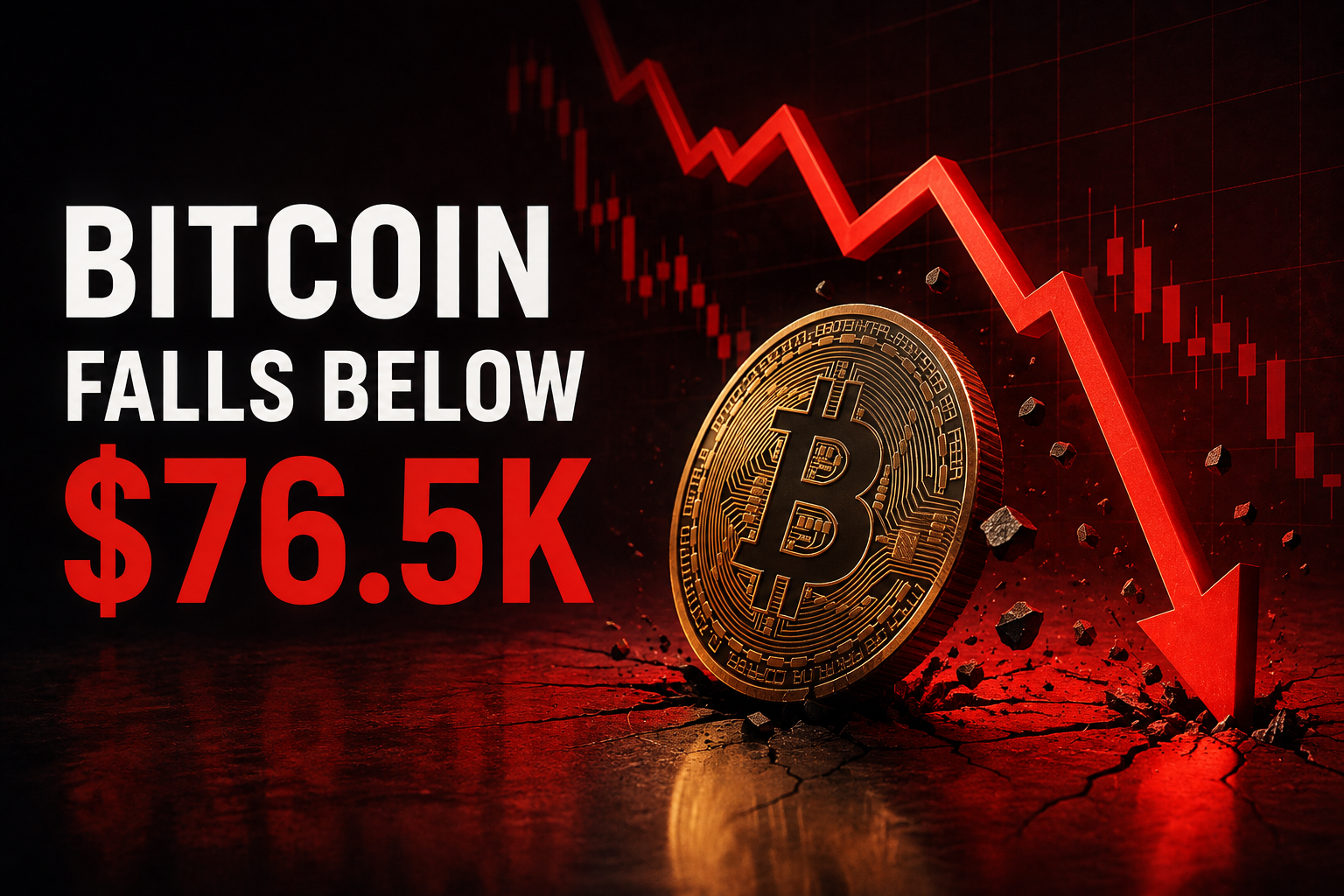

The cryptocurrency market experienced another wave of volatility as Bitcoin slipped below $76,500 following reports of U.S. military strikes on Iran. The geopolitical escalation sent shockwaves through global financial markets, driving oil prices above $93 per barrel and prompting investors to reassess risk exposure across multiple asset classes. As uncertainty spread, Bitcoin, often viewed as both a speculative asset and a potential hedge against traditional market instability, found itself caught between conflicting narratives.
Historically, geopolitical conflicts have influenced investor behavior in unpredictable ways. Some market participants view Bitcoin as a modern safe-haven asset similar to gold, while others see it as a high-risk investment that tends to decline when uncertainty increases. The latest developments in the Middle East have reignited this debate, with Bitcoin experiencing significant downward pressure despite broader concerns about inflation and economic instability.
At the same time, rising oil prices are adding another layer of complexity to the global economy. Higher energy costs can fuel inflation, impact consumer spending, and influence central bank policies. These macroeconomic factors often have a direct effect on cryptocurrency markets, making the current situation especially important for traders, investors, and analysts.
This article explores why Bitcoin fell below $76,500, how rising oil prices are affecting financial markets, the relationship between geopolitics and crypto assets, and what investors should watch in the coming weeks.
The Market Reaction to the U.S.-Iran Conflict
Geopolitical events have long influenced global financial markets. When military tensions escalate between major nations, investors often seek safety by moving capital away from riskier assets and into traditional safe havens such as government bonds, gold, and cash.
The recent U.S. strikes on Iran increased fears of broader regional instability in the Middle East, a region responsible for a significant portion of global oil production. Concerns about potential disruptions to energy supplies quickly pushed crude oil prices above $93 per barrel, creating uncertainty across equities, commodities, and digital assets.
Bitcoin’s decline below $76,500 reflects this broader market reaction. During periods of heightened uncertainty, investors often reduce exposure to volatile assets, and cryptocurrencies are frequently among the first to experience selling pressure. The immediate market response highlights how sensitive digital assets remain to global macroeconomic developments.
Why Oil Prices Matter for Bitcoin
The Connection Between Energy Markets and Cryptocurrency
Many investors may wonder why a rise in oil prices would impact Bitcoin. The answer lies in the broader economic consequences of increasing energy costs.
When oil prices surge, transportation, manufacturing, and production expenses often rise across industries. These higher costs can contribute to inflationary pressures, forcing central banks to maintain restrictive monetary policies or delay potential interest rate cuts.
For Bitcoin, this environment can be challenging. Higher interest rates typically strengthen traditional investment alternatives and reduce liquidity available for speculative assets. As a result, cryptocurrencies often face downward pressure during periods of tightening financial conditions.
The latest jump in oil prices has reignited concerns about persistent inflation, leading investors to reconsider their expectations for future monetary policy decisions.
Inflation Concerns and Bitcoin’s Role
Bitcoin supporters frequently describe the cryptocurrency as a hedge against inflation. The asset’s limited supply of 21 million coins creates scarcity that some investors believe protects purchasing power over time.
However, short-term market behavior often tells a different story. During periods of economic uncertainty, Bitcoin sometimes trades more like a technology stock than a traditional safe-haven asset. This means rising inflation fears can initially trigger selling before long-term investors begin accumulating positions.
The current situation illustrates this dynamic. While higher oil prices may eventually strengthen the case for Bitcoin as an alternative store of value, the immediate reaction has been dominated by risk aversion.
Bitcoin’s Performance During Geopolitical Crises
Historical Trends
Bitcoin’s response to geopolitical conflicts has varied significantly over the years. Some crises have led to sharp selloffs, while others have increased interest in decentralized assets.
During periods of financial uncertainty, investors often evaluate Bitcoin based on prevailing market conditions. If liquidity is abundant and economic growth remains strong, Bitcoin may attract capital as an alternative investment. However, when fears of recession or market instability dominate headlines, traders frequently reduce exposure to volatile assets.
Recent years have demonstrated that Bitcoin’s role in global markets continues to evolve. Its growing institutional adoption means it increasingly reacts to macroeconomic developments in ways similar to traditional financial assets.
Investor Psychology During Crises
Market psychology plays a crucial role during geopolitical events. Fear often leads investors to prioritize capital preservation over potential returns. This shift in sentiment can create sharp price swings across cryptocurrencies.
As headlines regarding military activity emerge, algorithmic trading systems, hedge funds, and retail investors may simultaneously reduce risk exposure. The resulting selling pressure can accelerate price declines, even when long-term fundamentals remain unchanged.
Bitcoin’s drop below $76,500 reflects this broader psychological response rather than a fundamental weakness in the underlying network.
The Impact of Rising Oil Prices on Global Markets
Energy Costs and Economic Growth
Oil remains one of the world’s most important commodities. Significant increases in oil prices can affect nearly every sector of the global economy.
Higher energy costs often reduce consumer spending power because households must allocate more money toward fuel, transportation, and utilities. Businesses also face increased operating expenses, which can reduce profit margins and slow economic growth.
Investors are closely monitoring whether oil remains above $93 for an extended period. Sustained high energy prices could create additional challenges for policymakers and financial markets.
Central Bank Considerations
Central banks around the world monitor energy prices closely because they directly influence inflation metrics. If inflation remains elevated due to rising oil costs, policymakers may delay interest rate cuts or maintain restrictive monetary policies longer than expected.
This scenario would likely impact cryptocurrencies because digital assets generally benefit from abundant liquidity and lower borrowing costs. A prolonged period of higher interest rates could continue to pressure Bitcoin and other risk-sensitive investments.
Institutional Investors and Bitcoin’s Decline
How Large Investors Are Responding
Institutional investors have become increasingly important participants in the cryptocurrency market. Asset managers, hedge funds, pension funds, and publicly traded companies now hold significant Bitcoin positions.
During periods of geopolitical uncertainty, institutional investors often rebalance portfolios to reduce risk exposure. This process can lead to substantial selling activity, especially when market volatility increases.
Recent trading data suggests that many large investors adopted a cautious approach following the escalation between the United States and Iran. While some institutions may view lower prices as buying opportunities, others are waiting for greater clarity before increasing exposure.
ETF Influence on Market Dynamics
The growth of Bitcoin ETFs, institutional crypto adoption, and digital asset investment products has transformed market behavior. Bitcoin now attracts a broader range of investors than ever before.
As a result, price movements increasingly reflect macroeconomic developments rather than purely crypto-specific factors. The recent decline demonstrates how integrated Bitcoin has become within the global financial system.
Safe-Haven Debate: Is Bitcoin Digital Gold?
Arguments Supporting Bitcoin as a Safe Haven
Many analysts continue to argue that Bitcoin represents a form of digital gold. Several characteristics support this perspective.
Bitcoin has a fixed supply, operates independently of governments, and allows users to transfer value globally without relying on traditional banking systems. These features can make it attractive during periods of economic or political uncertainty.
Supporters believe that as adoption increases, Bitcoin will become more resilient during market disruptions and eventually establish itself as a recognized safe-haven asset.
Arguments Against the Safe-Haven Narrative
Critics point to Bitcoin’s volatility as evidence that it has not yet achieved safe-haven status. Unlike gold, which often rises during periods of crisis, Bitcoin frequently experiences significant price swings.
The latest decline below $76,500 provides ammunition for skeptics who argue that Bitcoin remains primarily a risk asset rather than a defensive investment.
The reality may lie somewhere in between. Bitcoin appears to possess characteristics of both a growth asset and a store of value, causing its behavior to vary depending on market conditions.
Technical Analysis: Key Bitcoin Levels to Watch
Important Support Zones
From a technical perspective, traders are closely monitoring several support levels following Bitcoin’s decline.
The area around $76,000 represents an important psychological level. A sustained break below this zone could trigger additional selling pressure and increase short-term volatility.
Market participants are also watching lower support regions that may attract buyers seeking discounted entry points.
Resistance Levels
If geopolitical tensions ease and market sentiment improves, Bitcoin could attempt to recover recent losses.
Analysts are monitoring resistance zones above $78,000 and $80,000. Breaking through these levels could restore bullish momentum and encourage renewed investor confidence.
Technical indicators suggest that market direction will largely depend on upcoming economic data and geopolitical developments.
Broader Cryptocurrency Market Reaction
Altcoins Follow Bitcoin Lower
Bitcoin’s decline has affected the broader cryptocurrency market. Major altcoins, including Ethereum, Solana, BNB, and other leading digital assets, have also experienced increased volatility.
Because Bitcoin remains the dominant cryptocurrency by market capitalization, its price movements often influence sentiment across the entire sector. When Bitcoin falls sharply, altcoins frequently experience even larger percentage declines.
This interconnected behavior highlights the importance of Bitcoin as a market leader within the digital asset ecosystem.
Market Sentiment Remains Fragile
Investor sentiment remains cautious as traders evaluate the potential economic consequences of rising oil prices and geopolitical instability.
The combination of military tensions, inflation concerns, and uncertainty surrounding monetary policy has created a challenging environment for risk assets. Until greater clarity emerges, volatility may remain elevated throughout the cryptocurrency market.
What Investors Should Watch Next
Several factors will likely determine Bitcoin’s near-term direction.
First, developments related to the U.S.-Iran situation will remain a major focus. Any signs of de-escalation could improve investor confidence and support a recovery in risk assets.
Second, oil prices will continue influencing inflation expectations. If crude oil remains elevated, concerns about persistent inflation may increase.
Third, upcoming economic data and central bank commentary could shape expectations regarding future interest rate decisions. These factors often have a direct impact on cryptocurrency valuations.
Finally, institutional investment flows into Bitcoin-related products will provide valuable insight into market sentiment and long-term demand.
Conclusion
Bitcoin’s fall below $76,500 following U.S. strikes on Iran highlights the growing connection between cryptocurrency markets and global macroeconomic events. The surge in oil prices above $93 has intensified concerns about inflation, economic growth, and future monetary policy, creating a challenging environment for risk assets.
While the immediate market reaction has been negative, the long-term outlook for Bitcoin remains closely tied to broader adoption, institutional participation, and investor perceptions of digital assets. Whether Bitcoin ultimately strengthens its position as digital gold, a store of value, and a hedge against economic uncertainty will depend on how it performs during future periods of global instability.
