


The blockchain industry continues to evolve rapidly, with new networks emerging to address the limitations of older platforms. Among the most promising projects is Aptos (APT), a Layer-1 Proof-of-Stake blockchain designed to deliver exceptional scalability, security, and user experience. Created by former Meta (Facebook) engineers who worked on the Diem blockchain project, Aptos aims to drive blockchain technology toward mainstream adoption through an innovative architecture and developer-friendly tools.
Since its mainnet launch in October 2022, Aptos has attracted significant attention from developers, investors, and enterprises. Its unique approach to transaction processing, combined with the Move programming language, positions it as a strong competitor in the Layer-1 ecosystem.
What Is Aptos (APT)?
Aptos is a Layer-1 blockchain network that uses a Proof-of-Stake (PoS) consensus mechanism to provide fast, secure, and scalable decentralized applications (dApps). The project was founded by former Meta engineers Avery Ching and Mo Shaikh, leveraging technologies initially developed for the Diem blockchain initiative.
The primary goal of Aptos is to create a blockchain capable of supporting billions of users while maintaining low fees, high throughput, and strong security guarantees. To achieve this, Aptos utilizes parallel transaction execution and a specialized smart contract language called Move.
The Technology Behind Aptos
Move Programming Language
One of Aptos’ most important innovations is the Move programming language. Originally developed for Meta’s Diem project, Move is designed specifically for secure digital asset management and smart contract development. It emphasizes resource ownership, access control, and security, reducing the risk of common vulnerabilities found in other blockchain programming languages.
Move offers:
- Strong security guarantees
- Resource-oriented programming
- Formal verification capabilities
- Better protection against smart contract exploits
- Enhanced developer experience
These features make Move particularly attractive for developers building financial applications, NFTs, gaming platforms, and enterprise blockchain solutions.
Parallel Transaction Execution
Unlike traditional blockchains that process transactions sequentially, Aptos employs a parallel execution engine known as Block-STM. This system allows multiple transactions to be processed simultaneously, significantly improving network performance and throughput.
This innovation enables Aptos to theoretically support more than 150,000 transactions per second (TPS), making it one of the fastest blockchain networks in the industry.
Key Features of Aptos
High Scalability
Scalability remains one of the biggest challenges facing blockchain technology. Aptos addresses this issue through parallel execution, optimized consensus mechanisms, and advanced network architecture. These features allow the network to handle large transaction volumes without sacrificing speed or reliability.
Enhanced Security
Security is central to Aptos’ design philosophy. The Move language incorporates safety mechanisms that help prevent unauthorized asset duplication, accidental losses, and common coding vulnerabilities. Recent research has also highlighted Aptos’ defense-in-depth runtime safety checks that strengthen smart contract security.
Low Transaction Costs
Aptos is designed to maintain affordable transaction fees even during periods of high network activity. This makes it attractive for both retail users and enterprise applications that require frequent blockchain interactions.
Developer-Friendly Ecosystem
The Aptos ecosystem provides extensive development resources, including official SDKs, APIs, documentation, developer tools, testnet faucets, and educational materials. These resources help developers quickly build and deploy applications on the network.
The Role of the APT Token
The native cryptocurrency of the Aptos blockchain is APT. The token serves several important functions within the ecosystem:
Transaction Fees
Users pay network fees using APT whenever they execute transactions or interact with smart contracts on the blockchain.
Staking
APT holders can stake their tokens to help secure the network and participate in the Proof-of-Stake consensus process. In return, validators and delegators may earn staking rewards.
Governance
As the Aptos ecosystem evolves, APT token holders may participate in governance decisions that influence protocol upgrades and ecosystem development.
Aptos Ecosystem Growth
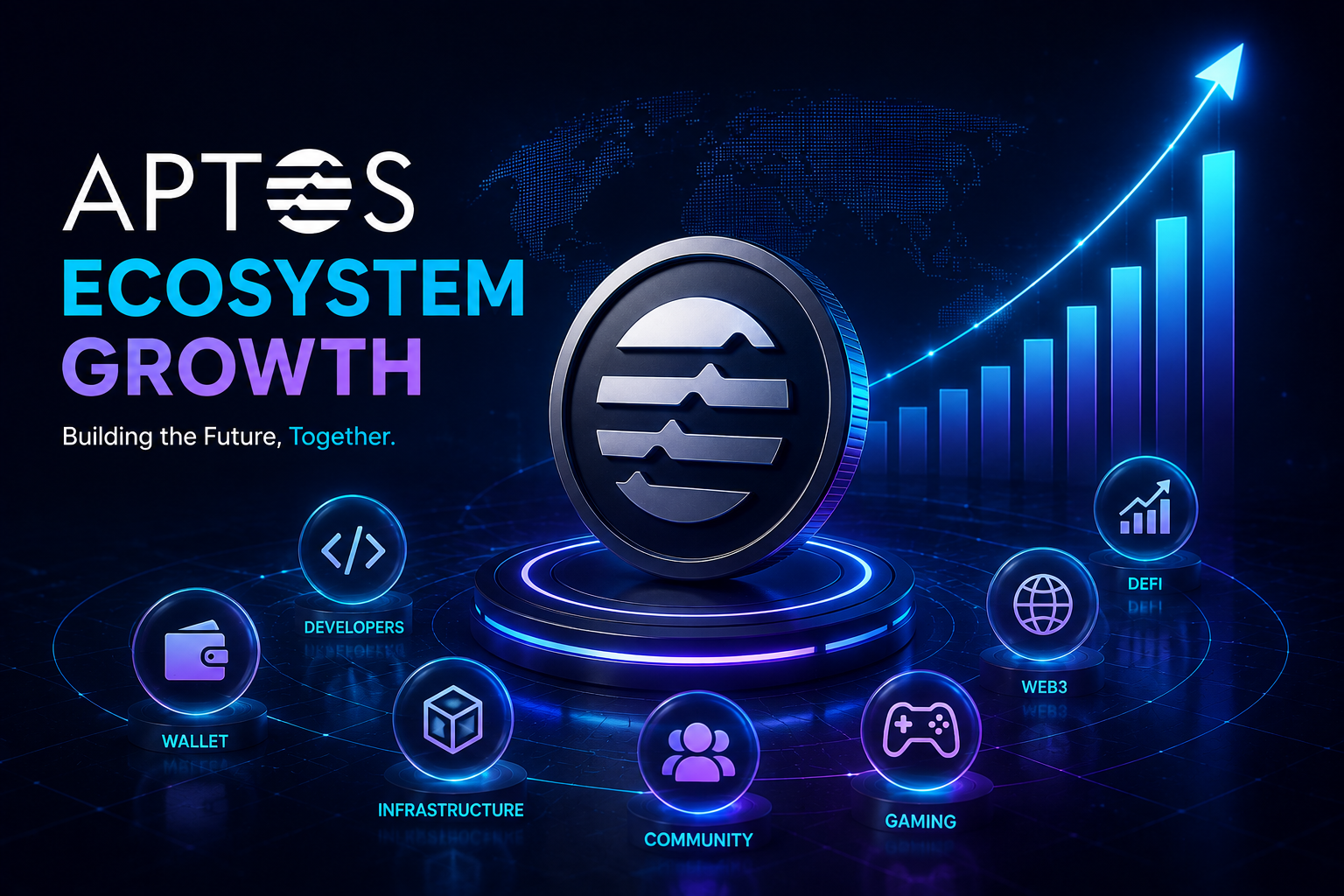
Since launch, Aptos has experienced significant ecosystem expansion. Developers have built a wide variety of applications across sectors including:
- Decentralized Finance (DeFi)
- NFTs
- Gaming
- Payments
- Social applications
- Enterprise solutions
The network has also attracted support from major venture capital firms and strategic investors. Aptos raised hundreds of millions of dollars in funding from organizations such as Andreessen Horowitz (a16z), Multicoin Capital, and Binance Labs.
Recent ecosystem reports indicate strong growth in user activity, particularly in emerging markets such as India, where Aptos has gained substantial adoption.
Advantages of Aptos
Speed and Performance
Aptos is designed for near-instant transaction processing and high throughput, making it suitable for large-scale applications and consumer-facing products.
Strong Security Model
The Move language and runtime safety mechanisms provide additional protection against many smart contract vulnerabilities.
Future-Proof Infrastructure
Aptos was built with upgradeability and long-term scalability in mind, allowing the protocol to evolve as blockchain technology advances.
Growing Developer Community
Educational resources, SDKs, and comprehensive documentation continue to attract developers to the ecosystem.
Challenges Facing Aptos
Like every blockchain project, Aptos faces challenges. Competition among Layer-1 networks remains intense, with established ecosystems such as Ethereum, Solana, Avalanche, and others competing for users and developers. Additionally, maintaining decentralization while achieving high performance is an ongoing challenge for all blockchain networks.
The long-term success of Aptos will depend on continued ecosystem growth, developer adoption, and real-world utility.
Future Outlook for Aptos
The future of Aptos appears promising due to its strong technical foundation, experienced leadership team, and growing ecosystem. As Web3 adoption expands, platforms capable of supporting millions of users with low fees and fast transactions may play a significant role in the next phase of blockchain development.
With ongoing improvements in infrastructure, developer tools, and ecosystem partnerships, Aptos is positioning itself as a leading blockchain platform for decentralized applications and digital asset innovation.
Conclusion
Aptos (APT) represents a new generation of blockchain technology focused on scalability, security, and usability. Built by former Meta engineers and powered by the innovative Move programming language, Aptos offers a compelling solution for developers and users seeking a high-performance blockchain platform. Through parallel transaction execution, robust security mechanisms, and a rapidly growing ecosystem, Aptos has established itself as one of the most promising Layer-1 networks in the cryptocurrency industry. As blockchain adoption continues to accelerate, Aptos is well-positioned to contribute significantly to the future of Web3.
