


The blockchain industry has evolved rapidly, with many networks competing to provide faster transactions, better scalability, and improved interoperability. Among these projects, Injective (INJ) has emerged as one of the most innovative blockchain platforms designed specifically for decentralized finance (DeFi). Built as a high-performance Layer-1 blockchain, Injective aims to create a financial ecosystem where developers can build decentralized applications (dApps), exchanges, lending platforms, prediction markets, and tokenized asset solutions without the limitations found on traditional blockchains.
Unlike many blockchain networks that focus on general-purpose applications, Injective is purpose-built for finance. It combines speed, interoperability, decentralized governance, and advanced trading infrastructure into a single ecosystem. As decentralized finance continues to grow, Injective positions itself as a leading platform for next-generation financial applications.
What Is Injective (INJ)?
Injective is an open-source, interoperable Layer-1 blockchain optimized for decentralized finance. The platform enables developers to build sophisticated financial applications using a highly scalable and efficient infrastructure. It supports decentralized exchanges (DEXs), derivatives trading, lending protocols, prediction markets, real-world asset (RWA) tokenization, and AI-powered financial applications.
The blockchain was developed by Injective Labs and was initially incubated by Binance. Over time, Injective has attracted support from major investors and established itself as a prominent player within the DeFi ecosystem. According to official documentation, the network has processed over a billion transactions and supports a rapidly expanding ecosystem of decentralized applications.
How Injective Works
Injective is built using a customized Proof-of-Stake (PoS) architecture that delivers fast transaction processing and near-instant finality. The network achieves block times of approximately 0.6 seconds while supporting high throughput, making it suitable for demanding financial applications.
The platform consists of several key components:
Injective Chain
The Injective Chain serves as the core blockchain network where transactions are processed and smart contracts are executed. It provides the infrastructure needed for decentralized financial applications and supports advanced trading mechanisms.
Smart Contracts
Injective utilizes a Wasm-based smart contract environment, enabling developers to create complex decentralized applications. The platform’s smart contract framework is designed for flexibility, security, and interoperability.
Cross-Chain Infrastructure
One of Injective’s strongest advantages is its interoperability. The blockchain supports communication with Ethereum, Solana, Cosmos-based chains, and numerous Inter-Blockchain Communication (IBC) networks. This allows users to move assets seamlessly across ecosystems.
Key Features of Injective
1. Fully Decentralized On-Chain Order Book
Unlike many decentralized exchanges that rely on Automated Market Makers (AMMs), Injective offers a fully decentralized Central Limit Order Book (CLOB). This allows traders to place limit orders and execute trades with greater precision and efficiency.
2. MEV-Resistant Infrastructure
Maximal Extractable Value (MEV) is a challenge for many blockchain networks because it can lead to front-running and unfair transaction ordering. Injective addresses this issue through MEV-resistant transaction mechanisms, helping create a fairer trading environment.
3. High-Speed Transactions
The network delivers sub-second block times and high throughput, making it capable of supporting institutional-grade trading applications and large-scale financial operations.
4. Cross-Chain Compatibility
Injective’s interoperability allows users to access assets and liquidity from multiple blockchain ecosystems. This capability improves capital efficiency and broadens the range of available financial products.
5. Shared Liquidity
Applications built on Injective can leverage a shared liquidity environment, reducing fragmentation and improving trading efficiency across the ecosystem.
The INJ Token
The native cryptocurrency of the Injective ecosystem is INJ. It serves multiple functions within the network and plays an important role in maintaining the blockchain’s security and governance.
Governance
INJ holders can participate in governance decisions, allowing the community to vote on protocol upgrades, parameter adjustments, and ecosystem proposals.
Staking
Users can stake INJ tokens to help secure the network and earn rewards through the Proof-of-Stake consensus mechanism.
Fee Utility
INJ is used for transaction fees and various activities across the Injective ecosystem.
Token Burn Mechanism
A distinctive feature of Injective is its buyback-and-burn model. According to the project’s documentation, a portion of fees generated by applications on the network is used to buy back and burn INJ tokens, potentially reducing supply over time.
Injective Ecosystem
The Injective ecosystem has expanded significantly, supporting more than 100 projects across various sectors. These include:
- Decentralized exchanges
- Lending and borrowing protocols
- Real-world asset platforms
- AI-powered financial applications
- Derivatives trading platforms
- Prediction market solutions
- Infrastructure and developer tools
The ecosystem’s growth reflects increasing adoption among developers and users seeking advanced financial applications.
Why Injective Stands Out
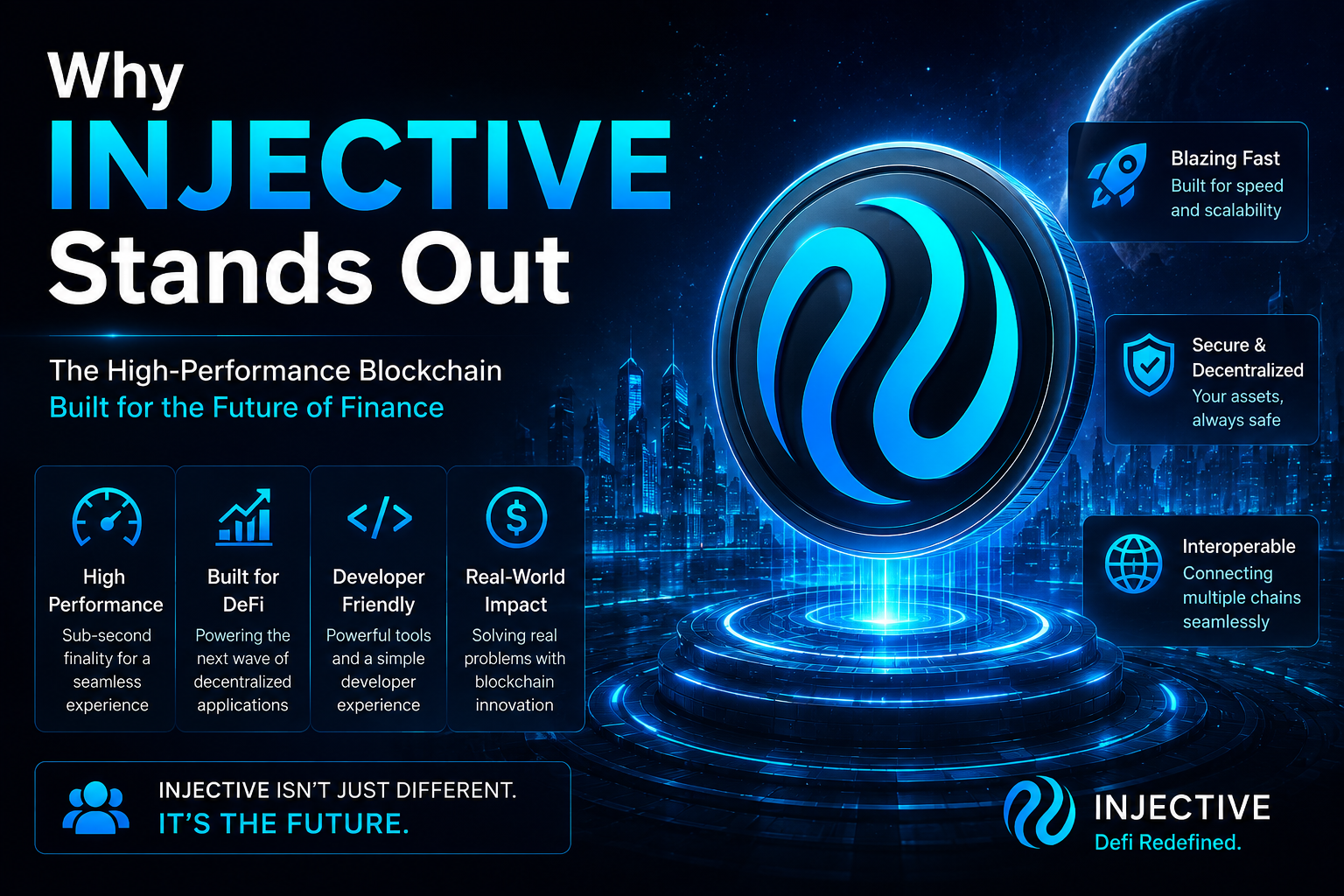
Several factors differentiate Injective from competing blockchain networks:
Finance-First Design
Unlike general-purpose blockchains, Injective was specifically created to support financial applications, making it highly optimized for DeFi use cases.
Institutional-Grade Infrastructure
The platform’s performance, order-book architecture, and interoperability make it attractive for both retail and institutional participants.
Developer-Friendly Environment
Injective provides modular infrastructure and tools that simplify the process of building sophisticated financial applications. Developers can launch products more efficiently compared to building everything from scratch.
Global Interoperability
By connecting multiple blockchain ecosystems, Injective enables seamless asset movement and liquidity sharing across chains.
Challenges and Risks
Like all blockchain projects, Injective faces certain challenges:
Competition
The DeFi sector remains highly competitive, with major platforms such as Ethereum, Solana, and other Layer-1 networks continuously innovating.
Regulatory Uncertainty
Global regulations surrounding cryptocurrencies and decentralized finance continue to evolve, potentially impacting adoption and growth.
Market Volatility
The value of INJ, like most cryptocurrencies, can experience significant price fluctuations due to market conditions and investor sentiment.
Future Outlook for Injective
The future of Injective appears promising as decentralized finance expands into new areas such as tokenized real-world assets, artificial intelligence integration, and cross-chain financial infrastructure. The project’s continued focus on interoperability, scalability, and developer tools positions it well for long-term growth. Official documentation highlights ongoing innovation through MultiVM development, AI integrations, and expanded ecosystem support.
As institutions and developers increasingly seek blockchain platforms optimized for finance, Injective could play a significant role in shaping the next generation of decentralized financial services.
Conclusion
Injective (INJ) is a specialized Layer-1 blockchain designed to power the future of decentralized finance. With its high-speed infrastructure, fully decentralized order book, cross-chain interoperability, MEV-resistant architecture, and growing ecosystem, Injective offers a compelling platform for developers and users alike. As DeFi adoption continues to accelerate, Injective’s finance-focused approach and innovative technology may help it become one of the leading blockchain networks in the industry.
