

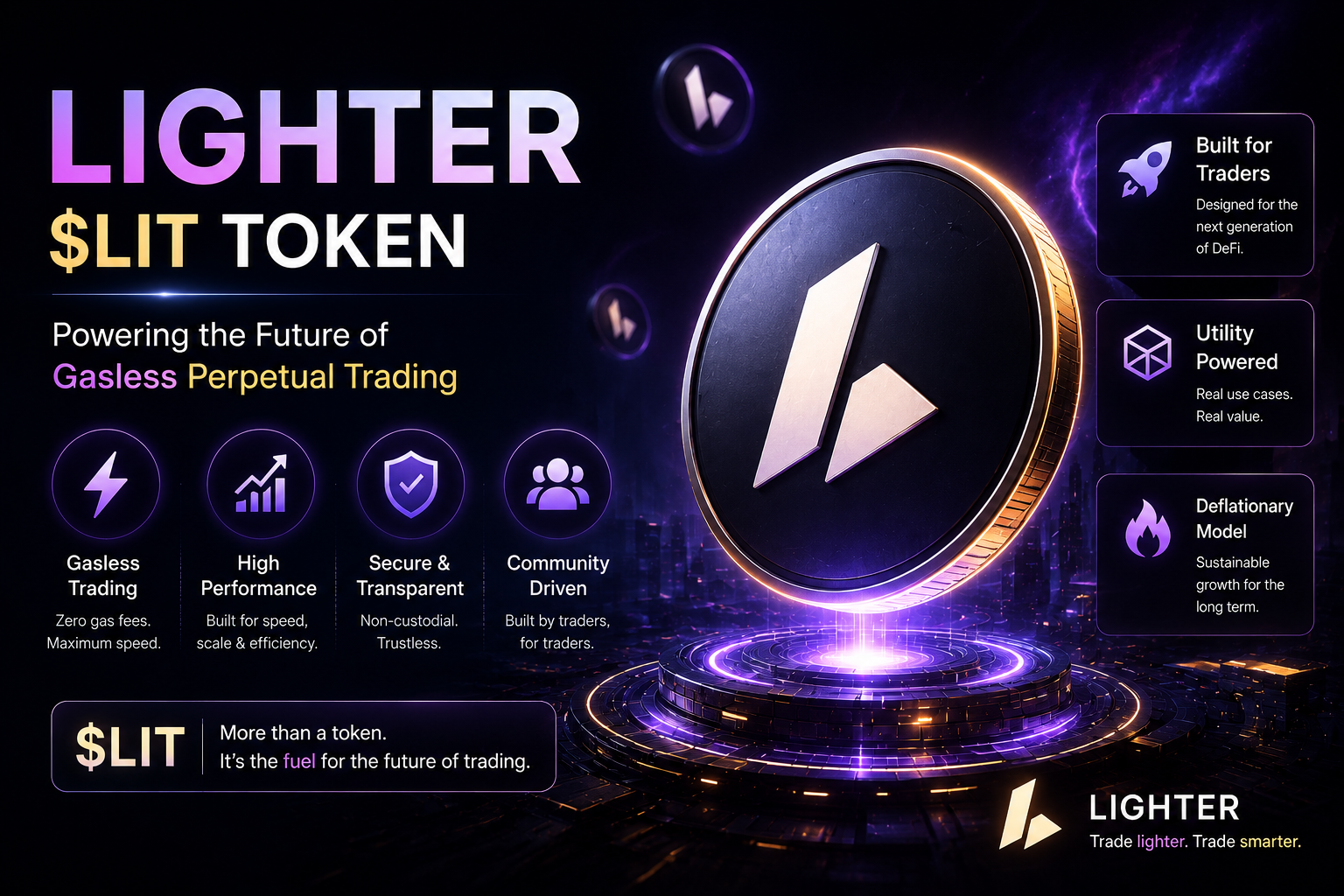

The cryptocurrency industry continues to evolve with innovative decentralized finance (DeFi) solutions that aim to provide the speed of centralized exchanges while maintaining the transparency and security of blockchain technology. One of the emerging projects in this space is Lighter (LIT), a decentralized trading platform designed for high-performance crypto trading.
Lighter combines advanced zero-knowledge (ZK) technology, verifiable order matching, and Ethereum-level security to create a next-generation trading experience. Unlike many decentralized exchanges that struggle with scalability and latency issues, Lighter focuses on delivering fast execution, low costs, and transparent trade verification. According to official project documentation, Lighter is the first exchange to provide verifiable order matching and liquidations while maintaining performance comparable to traditional exchanges.
This article explores Lighter’s technology, tokenomics, use cases, benefits, risks, and future potential.
What Is Lighter (LIT)?
Lighter is a decentralized perpetual futures exchange built on a custom zero-knowledge rollup secured by Ethereum. The platform is designed to offer professional-grade trading performance while ensuring transparency and security through cryptographic proofs.
The platform aims to solve several challenges commonly found in decentralized exchanges, including:
- Slow transaction speeds
- High trading fees
- Limited scalability
- Lack of transparent order execution
- Centralization concerns
By leveraging ZK-rollup infrastructure, Lighter can process a large number of transactions while inheriting the security guarantees of Ethereum.
How Lighter Works
Lighter operates using a custom-built ZK-rollup architecture. Instead of processing every transaction directly on Ethereum, the platform batches large numbers of transactions and submits cryptographic proofs to the Ethereum network.
This approach offers several benefits:
High-Speed Trading
The platform is engineered to process tens of thousands of orders and cancellations per second with extremely low latency.
Verifiable Order Matching
One of Lighter’s most unique features is its ability to provide cryptographic proof that orders are matched fairly and accurately. This creates a transparent trading environment where users can independently verify platform operations.
Ethereum Security
Because Lighter settles through Ethereum infrastructure, users benefit from one of the most secure blockchain ecosystems in the crypto industry.
Reduced Costs
The platform’s optimized infrastructure enables low trading costs and even zero-fee trading for certain retail participants.
The LIT Token
The native cryptocurrency of the Lighter ecosystem is LIT.
The token plays several important roles within the platform, including governance participation, staking opportunities, and ecosystem incentives. According to project information, LIT holders may benefit from fee-sharing mechanisms, staking rewards, and governance rights.
Key Token Metrics
Current publicly available data indicates:
- Token Symbol: LIT
- Maximum Supply: 1 Billion LIT
- Circulating Supply: Approximately 250 Million LIT
- Market Capitalization: Over $500 Million
- Trading Availability: Multiple centralized and decentralized exchanges support LIT trading.Major Features of Lighter
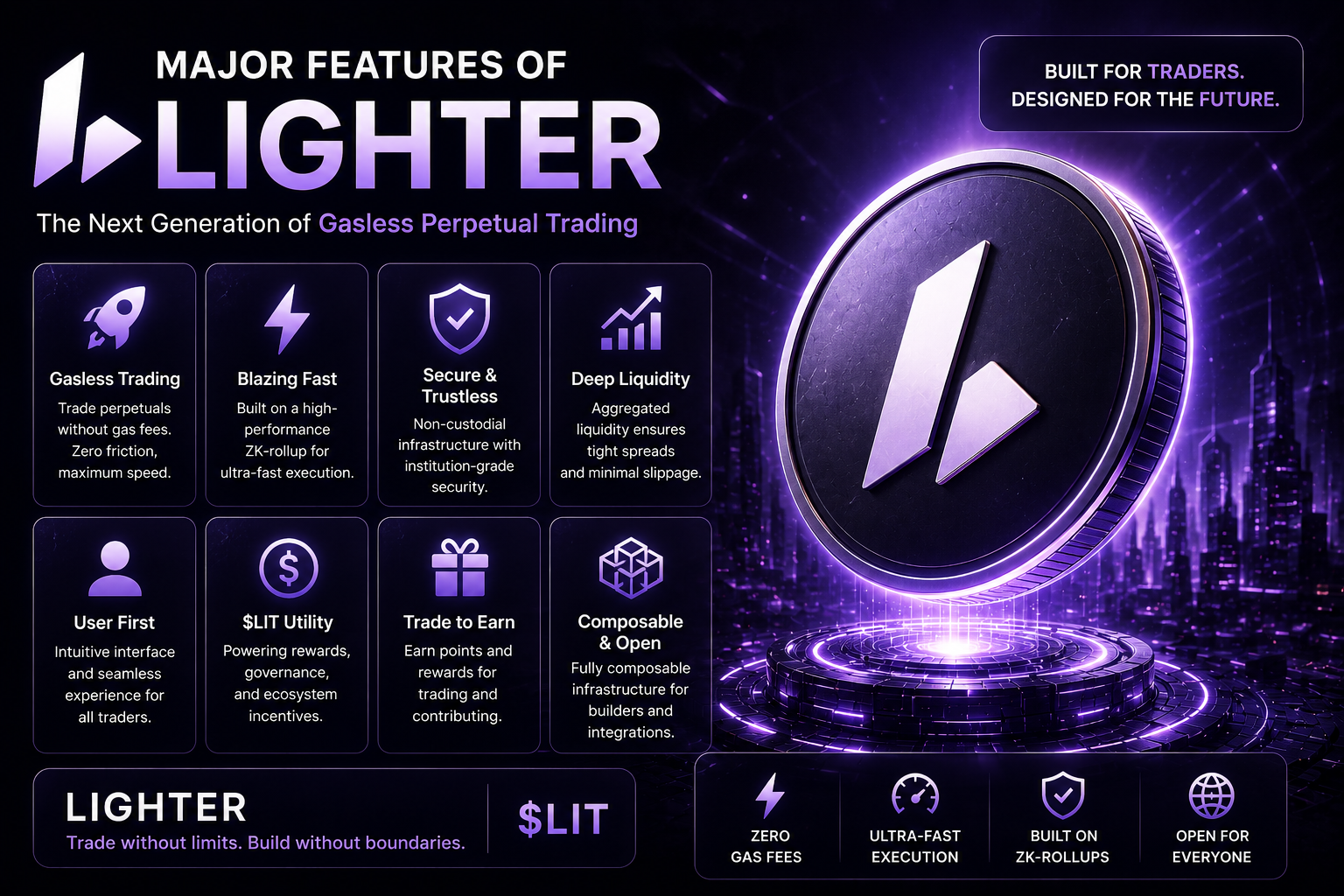
Major Features of Lighter
1. Decentralized Perpetual Trading
Lighter allows users to trade perpetual futures contracts while maintaining custody of their assets through decentralized infrastructure.
2. Zero-Knowledge Rollup Technology
The project’s custom ZK-rollup improves scalability and throughput while reducing transaction costs.
3. Verifiable Liquidations
Users can verify that liquidations are conducted fairly and in accordance with protocol rules, thereby increasing transparency and trust.
4. High Throughput
The platform can handle trading volumes comparable to those of centralized exchanges without sacrificing decentralization.
5. Ethereum Compatibility
Lighter inherits Ethereum security while maintaining interoperability with the broader Ethereum ecosystem.
Real-World Use Cases
Professional Trading
Active traders can access fast execution and deep liquidity while retaining the benefits of decentralized finance.
DeFi Participation
Users can engage with derivatives markets without relying on centralized intermediaries.
Governance
LIT token holders can potentially influence future protocol decisions through governance mechanisms.
Staking
The platform includes staking-related incentives that may reward long-term ecosystem participants.
Advantages of Lighter
Strong Security
The protocol leverages Ethereum’s security while using cryptographic proofs for verification.
Transparency
Every trade and liquidation can be independently verified, reducing trust assumptions.
Scalability
The ZK-rollup infrastructure significantly improves transaction throughput compared to traditional on-chain exchanges.
Lower Fees
Optimized architecture enables cost-efficient trading.
Growing Ecosystem
Lighter continues to expand through partnerships, exchange listings, and platform enhancements.
Potential Risks
Like all cryptocurrency projects, Lighter carries risks that investors should consider.
Market Volatility
Cryptocurrencies are highly volatile and can experience substantial price fluctuations.
Competition
The perpetual futures market is highly competitive, with numerous decentralized exchanges competing for market share.
Token Unlocks
Future token unlock schedules may increase circulating supply and affect market dynamics.
Regulatory Uncertainty
Global cryptocurrency regulations continue to evolve and may impact DeFi platforms in the future.
Future Potential of Lighter
The long-term outlook for Lighter depends on several key factors:
Expansion of DeFi Derivatives
The decentralized derivatives sector continues to grow, creating opportunities for platforms offering superior user experiences.
Increased Adoption of ZK Technology
Zero-knowledge technology is increasingly viewed as one of the most important scaling solutions for blockchain networks. Lighter’s early adoption of this infrastructure could provide a competitive advantage.
Platform Growth
Ongoing product development, ecosystem partnerships, and increased trading activity could strengthen the utility of the LIT token over time.
Institutional Interest
As professional traders seek decentralized alternatives with centralized-exchange performance, platforms like Lighter may benefit from broader adoption.
Conclusion
Lighter (LIT) is positioning itself as a next-generation decentralized trading platform that combines the transparency of DeFi with the performance of traditional exchanges. Through its custom zero-knowledge rollup, verifiable order matching, and Ethereum-based security model, the project addresses many of the limitations that have historically affected decentralized exchanges.
With growing adoption of zero-knowledge technology, increasing interest in decentralized derivatives, and a focus on scalability and transparency, Lighter has established itself as a noteworthy project in the evolving DeFi landscape. While investors should remain aware of market and regulatory risks, the platform’s innovative technology and expanding ecosystem provide a strong foundation for future growth.
