

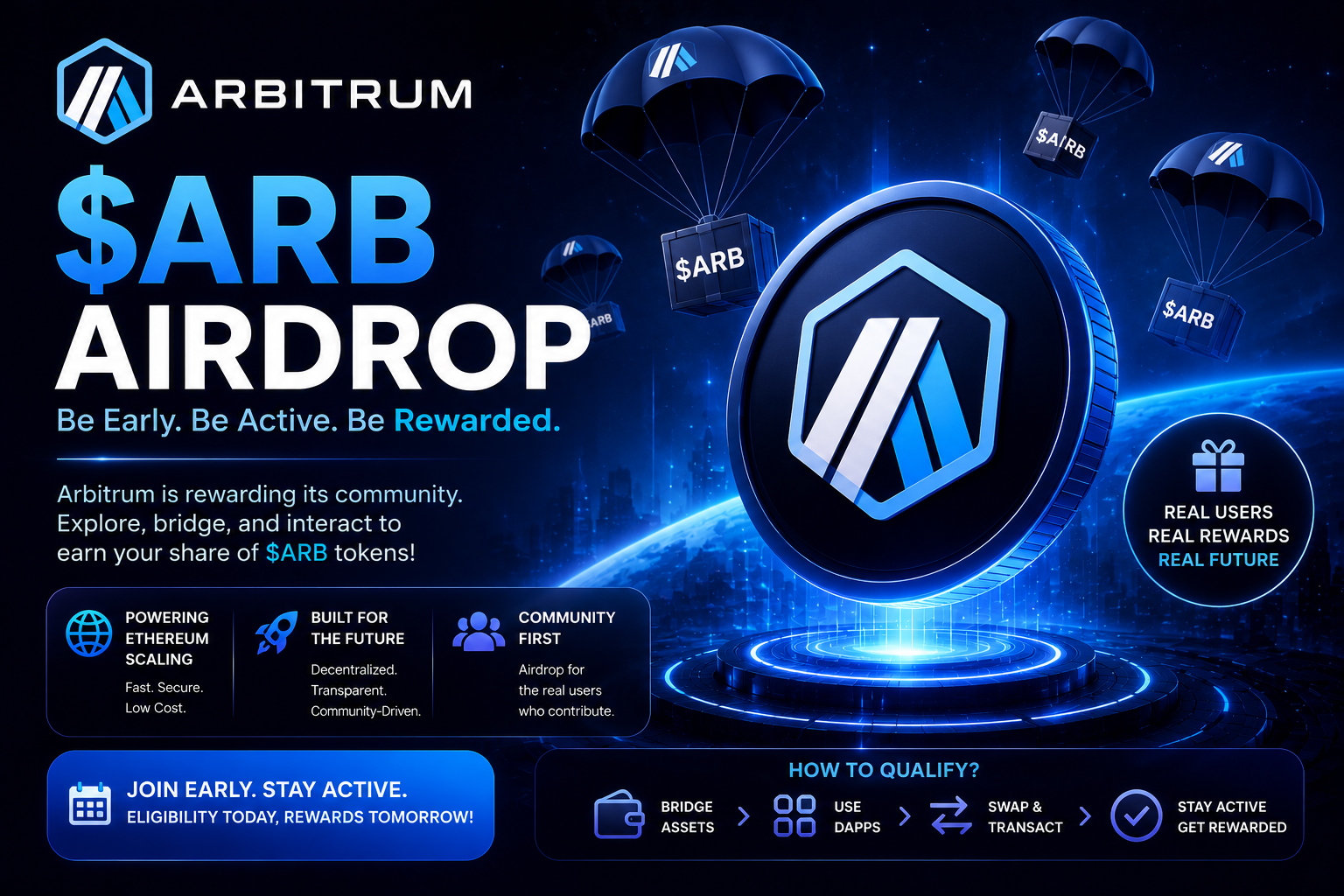

Arbitrum (ARB) is one of the most popular Ethereum Layer-2 scaling solutions designed to improve the speed, scalability, and cost-efficiency of the Ethereum network. Built by Offchain Labs, Arbitrum utilizes Optimistic Rollup technology to process transactions off-chain while maintaining Ethereum’s security and decentralization. This approach enables users to enjoy significantly lower transaction fees and faster confirmations without sacrificing the security guarantees of the Ethereum blockchain.
Since its launch, Arbitrum has become a major player in the blockchain industry, attracting developers, decentralized applications (dApps), and investors looking for a more efficient way to interact with Ethereum-based services. The network supports a wide range of applications, including decentralized finance (DeFi), gaming, NFTs, and enterprise blockchain solutions.
The History of Arbitrum
Arbitrum was developed by Offchain Labs, a blockchain technology company founded by Ed Felten, Steven Goldfeder, and Harry Kalodner. The project was created to solve Ethereum’s scalability challenges, which became increasingly apparent as network usage grew and gas fees surged. Arbitrum One, the project’s main network, launched in 2021 and quickly gained adoption among developers and users.
In 2023, the Arbitrum ecosystem introduced the ARB governance token and transitioned toward decentralized governance through the Arbitrum DAO. This move allowed token holders to participate in important decisions regarding protocol upgrades, treasury management, and ecosystem development.
How Arbitrum Works
Arbitrum operates using Optimistic Rollups, a technology that bundles multiple transactions together before submitting them to Ethereum. Instead of processing every transaction directly on Ethereum, Arbitrum executes them off-chain and periodically posts transaction data to Ethereum for verification.
The system assumes transactions are valid by default, hence the term “optimistic.” If a participant believes a transaction is fraudulent, they can challenge it through a fraud-proof mechanism. Ethereum ultimately serves as the final settlement layer, ensuring security and transparency.
This architecture offers several benefits:
- Faster transaction speeds
- Lower gas fees
- Ethereum-level security
- Improved scalability
- Enhanced user experience
These advantages have made Arbitrum one of the most widely adopted Layer-2 networks in the blockchain industry.
Key Features of Arbitrum
1. Ethereum Compatibility
One of Arbitrum’s biggest strengths is its compatibility with the Ethereum Virtual Machine (EVM). Developers can migrate existing Ethereum applications to Arbitrum with little or no code modifications. This significantly reduces development costs and encourages ecosystem growth.
2. Low Transaction Fees
Ethereum users often face high gas fees during periods of network congestion. Arbitrum dramatically reduces these costs by processing transactions off-chain and batching them efficiently.
3. High Scalability
Arbitrum can process substantially more transactions than Ethereum alone, helping reduce congestion while maintaining security. This scalability is essential for mass blockchain adoption.
4. Strong Security
Because transaction data ultimately settles on Ethereum, Arbitrum inherits the security of the world’s largest smart contract blockchain. Fraud-proof mechanisms further enhance network integrity.
5. Developer-Friendly Environment
Arbitrum offers tools and infrastructure that simplify application deployment. Technologies such as Stylus allow developers to write smart contracts using programming languages beyond Solidity, including Rust and C++.
The ARB Token Explained
ARB is the native governance token of the Arbitrum ecosystem. Unlike ETH, which is used for gas fees, ARB primarily serves governance purposes. Token holders can vote on proposals related to protocol upgrades, treasury allocations, grants, and ecosystem initiatives.
Main Uses of ARB
- Governance voting
- DAO participation
- Ecosystem decision-making
- Community-driven development
The total ARB supply is capped at 10 billion tokens, with allocations distributed among the DAO treasury, investors, team members, advisors, and community participants.
Arbitrum Ecosystem
The Arbitrum ecosystem has grown rapidly and now supports hundreds of blockchain projects across multiple sectors. Its ecosystem includes decentralized exchanges, lending protocols, derivatives platforms, NFT marketplaces, gaming projects, and infrastructure providers.
Popular protocols operating within the ecosystem include:
- GMX
- Uniswap
- Aave
- Curve Finance
- Balancer
- Camelot
- Treasure DAO
These applications benefit from lower fees and faster transaction execution compared to Ethereum mainnet.
Community discussions also highlight Arbitrum’s expanding presence in lending, derivatives, real-world assets (RWAs), and consumer applications, demonstrating the network’s growing maturity and diversity.
Arbitrum DAO and Decentralized Governance
The Arbitrum DAO represents one of the largest decentralized governance systems in the blockchain industry. Through the DAO, ARB holders can propose and vote on changes that impact the network’s future. Governance decisions include:
- Protocol upgrades
- Treasury management
- Ecosystem grants
- Security council elections
- Strategic partnerships
This governance model promotes transparency and community participation while reducing reliance on centralized decision-making.
Institutional Adoption and Growth
Arbitrum has increasingly attracted institutional interest due to its scalability and mature ecosystem. According to reports from the Arbitrum Foundation, the network has expanded significantly, supporting a large number of projects and attracting major partners. The ecosystem has grown into a comprehensive blockchain platform serving developers, enterprises, and decentralized communities alike.
This institutional momentum strengthens Arbitrum’s position as one of the leading Layer-2 solutions in the blockchain industry.
Advantages of Arbitrum
Faster Transactions
Users enjoy significantly quicker transaction confirmations compared to the Ethereum mainnet.
Lower Costs
Transaction fees are substantially reduced, making DeFi and NFT activities more accessible.
Ethereum Security
Arbitrum benefits from Ethereum’s established security infrastructure.
Extensive Ecosystem
A broad range of applications and services operate within the network.
Strong Developer Support
Easy migration and development tools encourage innovation and ecosystem expansion.
Challenges Facing Arbitrum
Despite its success, Arbitrum faces competition from other Layer-2 solutions such as Optimism, Base, zkSync, and Starknet. As blockchain technology evolves, maintaining technological leadership will require continuous innovation.
Additionally, governance debates and token distribution discussions have occasionally generated community scrutiny, highlighting the importance of transparency and effective decentralized governance.
Future Potential of Arbitrum
The future of Arbitrum appears promising as Ethereum adoption continues to grow. Demand for scalable infrastructure is expected to increase, positioning Layer-2 networks as critical components of blockchain expansion. Arbitrum’s roadmap includes ecosystem growth, developer tooling improvements, expanded governance capabilities, and broader adoption across multiple industries.
With strong developer support, a thriving ecosystem, institutional interest, and robust governance mechanisms, Arbitrum remains one of the most influential projects shaping Ethereum’s future.
Conclusion
Arbitrum (ARB) has established itself as a leading Ethereum Layer-2 solution by delivering faster transactions, lower fees, and enhanced scalability while preserving Ethereum’s security. Its Optimistic Rollup technology, developer-friendly infrastructure, decentralized governance model, and rapidly expanding ecosystem make it a cornerstone of the modern blockchain landscape. As Web3 adoption accelerates, Arbitrum is well-positioned to play a significant role in the future of decentralized applications and blockchain innovation.
