


Introduction
The cryptocurrency market is once again focusing on LayerZero’s native token, ZRO, after the protocol unveiled ATLAS, a new infrastructure product designed to transform how global markets operate. The announcement generated significant excitement among investors, traders, and blockchain enthusiasts because ATLAS introduces a new utility layer that could increase demand for ZRO while expanding LayerZero’s ecosystem.
LayerZero has established itself as one of the leading interoperability protocols in the blockchain industry. Its technology enables seamless communication and asset transfers across multiple blockchains, helping solve one of crypto’s biggest challenges: fragmentation. With the launch of ATLAS, LayerZero is taking another ambitious step by moving beyond interoperability and into market infrastructure. According to the project, ATLAS is a headless exchange system designed to power both open and institutional markets while leveraging the capabilities of the Zero blockchain.
Following the announcement, ZRO experienced a notable price increase as investors evaluated the long-term implications of the new platform. Market participants are now asking a key question: can ZRO reach the $1.46 level in the near future? To answer that, it is important to understand what ATLAS is, how it affects the LayerZero ecosystem, and what factors could influence the token’s future price action.
LayerZero and the Role of ZRO
LayerZero has become a critical component of the cross-chain ecosystem by enabling applications and assets to communicate across different blockchain networks. As decentralized finance, gaming, and tokenized assets continue expanding, the need for reliable interoperability infrastructure has become increasingly important.
The ZRO token serves several functions within the LayerZero and Zero ecosystem. It acts as a governance asset, supports network security through delegated proof-of-stake mechanisms, and functions as the gas token within the Zero blockchain infrastructure. The introduction of ATLAS expands the token’s utility even further by integrating it directly into the platform’s economic model.
This expanded utility is one reason investors are becoming more optimistic about ZRO’s long-term prospects. Historically, cryptocurrencies that gain additional use cases often experience stronger demand as users and institutions require the token to participate in the ecosystem.
What Is ATLAS?
A New Generation Market Infrastructure
ATLAS, which stands for Aggregated Trading Liquidity and Settlement, is a market infrastructure platform built on LayerZero’s Zero blockchain. Unlike traditional exchanges, ATLAS does not operate as a consumer-facing trading application. Instead, it functions as a backend engine that allows exchanges, brokers, institutions, and trading venues to build their own marketplaces on top of its infrastructure.
LayerZero describes ATLAS as a headless exchange because it provides the underlying technology while allowing operators to maintain control over their user interfaces, customer relationships, and business models. This approach removes the need for companies to either build exchange infrastructure from scratch or rely on competitors for backend services.
Combining Traditional and Decentralized Finance
One of the most interesting aspects of ATLAS is its attempt to combine the strengths of both centralized and decentralized finance. The platform integrates matching, clearing, settlement, and risk management into a single technology stack.
This design aims to deliver the speed and efficiency associated with traditional exchanges while maintaining the transparency and verifiability found in decentralized systems. ATLAS is also designed to support both crypto-native applications and institutional markets, potentially opening the door to broader adoption.
How ATLAS Benefits ZRO
Increased Token Utility
A major catalyst for ZRO is the direct integration of the token into ATLAS operations. Trading venues using the platform can stake ZRO to qualify for fee rebates. This creates an incentive for businesses to acquire and hold ZRO as they grow their trading activity.
Additional utility often leads to stronger demand because participants need the token to access ecosystem benefits. As more venues potentially adopt ATLAS, the demand for ZRO could increase accordingly.
Buyback and Burn Mechanism
Perhaps the most bullish aspect of the ATLAS economic model is its fee allocation system. After trading venues receive their rebates and market creators receive their share, a large portion of the remaining fees is used to buy and burn ZRO tokens.
Token burning permanently removes coins from circulation. Over time, if trading activity grows significantly, this mechanism could reduce the available supply of ZRO while demand increases. Such dynamics often create favorable conditions for price appreciation.
Institutional Exposure
ATLAS is designed not only for crypto users but also for institutions seeking modern market infrastructure. Institutional adoption has long been viewed as a major growth driver for blockchain networks.
If ATLAS successfully attracts institutional trading venues, brokers, and financial firms, ZRO could benefit from greater visibility, increased transaction activity, and broader market participation.
Why ZRO Surged After the Announcement
The market reacted positively to the ATLAS announcement because investors recognized its potential impact on the token’s utility and demand. Reports indicated that ZRO gained significant momentum following the news as traders rushed to position themselves ahead of potential ecosystem growth.
Several factors contributed to the rally. First, ATLAS represents a major expansion of LayerZero’s business model. Second, the integration of staking, fee rebates, and token burns creates direct value accrual mechanisms for ZRO holders. Third, investors often reward projects that demonstrate ongoing innovation and ecosystem development.
The combination of these factors helped strengthen bullish sentiment around the token.
Technical Analysis: Can ZRO Reach $1.46?
Current Momentum
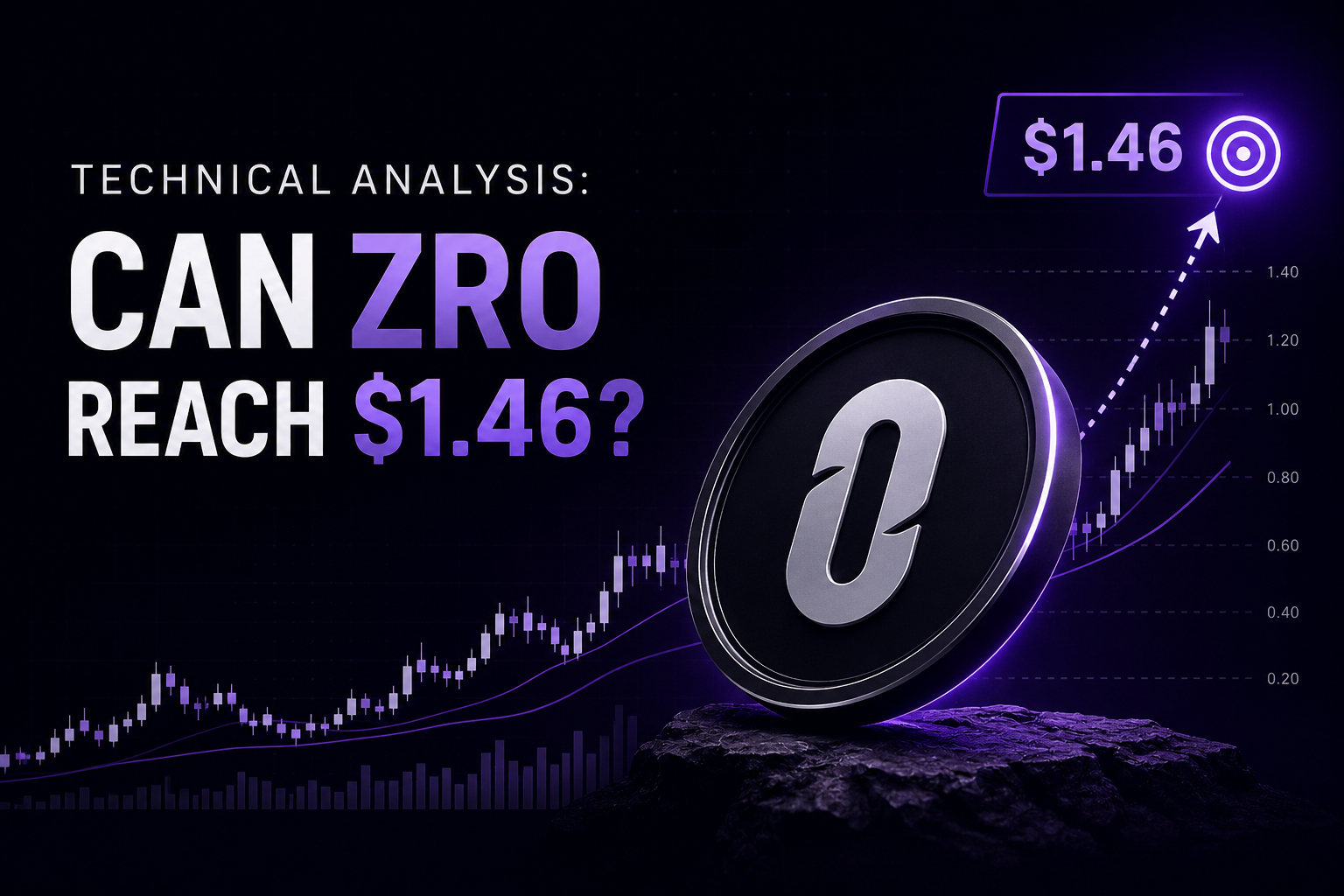
From a technical perspective, momentum appears to be improving following the ATLAS announcement. Market sentiment has shifted positively as traders anticipate future adoption and increased demand for ZRO.
The token’s recent rally suggests buyers remain active, and positive momentum indicators have encouraged speculation that additional upside may be possible. Several market observers have pointed to the $1.46 level as a potential short-term target.
Key Resistance Levels
The path toward $1.46 depends largely on ZRO’s ability to break through intermediate resistance zones. In cryptocurrency markets, resistance levels often emerge where previous selling activity occurred.
If buying pressure remains strong and trading volume continues increasing, ZRO could challenge these resistance levels and potentially move toward the $1.46 target. However, failure to maintain momentum could result in consolidation before another attempt higher.
Volume Confirmation
Trading volume plays a crucial role in validating price movements. A breakout toward $1.46 would be more convincing if accompanied by sustained volume growth.
Investors should monitor whether interest remains elevated after the initial excitement surrounding ATLAS. Strong volume would suggest continued confidence in the project’s future prospects.
Fundamental Factors Supporting a Move to $1.46
Growing Demand for Cross-Chain Infrastructure
The blockchain industry is becoming increasingly interconnected. As more applications operate across multiple chains, demand for interoperability solutions, cross-chain messaging, and omnichain infrastructure is expected to grow.
LayerZero is already a recognized leader in this segment, giving it a strong foundation for future expansion. ATLAS adds another growth layer that could strengthen the ecosystem even further.
Expansion Into Global Markets
ATLAS positions LayerZero within the broader market infrastructure industry rather than limiting it to blockchain interoperability. This significantly increases the project’s potential addressable market.
The ability to support tokenized assets, crypto markets, institutional trading venues, and global settlement systems creates opportunities for substantial growth over the coming years.
Strong Tokenomics
The combination of staking requirements, governance utility, gas usage, and buyback-and-burn mechanisms creates a compelling token model.
Investors often favor projects where token demand is directly linked to platform usage. ATLAS strengthens this relationship by tying trading activity to ZRO economics.
Risks That Could Prevent ZRO From Reaching $1.46
Adoption Uncertainty
While ATLAS appears promising, its success ultimately depends on adoption. If exchanges, brokers, and institutions are slow to integrate the platform, demand growth for ZRO may not meet expectations.
New infrastructure products often require time to gain traction, making adoption a key variable.
Market Volatility
Cryptocurrency markets remain highly volatile. Even strong projects can experience significant price swings due to broader market conditions.
A correction in Bitcoin or the overall crypto market could impact ZRO regardless of ATLAS developments.
Competitive Landscape
The blockchain infrastructure sector is highly competitive. Numerous projects are working on interoperability, settlement, and trading solutions.
LayerZero must continue innovating to maintain its competitive advantage and attract long-term users.
Long-Term Outlook for LayerZero
The ATLAS launch demonstrates LayerZero’s ambition to become more than an interoperability protocol. By expanding into market infrastructure, the company is positioning itself at the intersection of blockchain technology, digital assets, tokenized finance, and institutional adoption.
If ATLAS gains meaningful traction, it could significantly strengthen LayerZero’s ecosystem and create sustainable demand drivers for ZRO. The integration of fee rebates, staking incentives, and token burns provides a framework that many investors view as favorable for long-term value creation.
While short-term price targets attract attention, the bigger story may be LayerZero’s evolving role within the future financial system.
Conclusion
The launch of ATLAS has introduced a powerful new narrative for LayerZero and its native token, ZRO. By creating a headless exchange infrastructure that serves both crypto-native and institutional markets, LayerZero is expanding its reach far beyond interoperability. The direct integration of ZRO into staking, governance, gas payments, fee rebates, and buyback-and-burn mechanisms provides multiple drivers for potential demand growth.
Can ZRO hit $1.46 after LayerZero launches ATLAS? The answer is certainly possible, especially if market sentiment remains positive, adoption accelerates, and trading activity on ATLAS grows. However, investors should also consider adoption risks, market volatility, and competition before making decisions. The ATLAS launch is a significant milestone, and the coming months will likely determine whether ZRO can transform short-term excitement into sustained long-term growth.
