



Bitcoin is approaching a potentially significant milestone as September 2026 draws to a close: a third consecutive monthly gain. After a powerful August rally, the world’s largest cryptocurrency has maintained much of its momentum through September despite a series of macroeconomic and regulatory challenges. That resilience has placed Bitcoin back at the center of the cryptocurrency market narrative just as investors turn their attention toward the fourth quarter.
Recent market data show that Bitcoin moved sharply higher during the second half of September, briefly trading above $87,000 before retreating toward the mid-$80,000 range. CME historical data show Bitcoin futures closing around $84,995 on September 26, following a September 23 high above $87,000.
The potential third monthly advance is notable because September has historically been one of Bitcoin’s weaker months. Yet the cryptocurrency has shown considerable resilience in 2026, even as Treasury yields, oil prices, monetary policy uncertainty and regulatory developments have created additional volatility.
That leaves the Bitcoin market entering Q4 with two competing forces. On one side is improving momentum, renewed spot Bitcoin ETF inflows, accumulation by large holders and a stronger price structure. On the other are elevated bond yields, inflation concerns, a stronger dollar, potential changes in monetary policy and unresolved cryptocurrency legislation.
The result is a market where Bitcoin’s recent strength is important, but where the risks surrounding the next phase of the rally deserve close attention.
Bitcoin Approaches a Rare Three-Month Winning Streak
Bitcoin’s September performance stands out because of the cryptocurrency’s historical seasonal weakness during this month. According to recent CoinDesk reporting, Bitcoin was on track for a third consecutive monthly gain after rising approximately 10% in September as of September 23. That would represent a relatively unusual three-month winning streak for the cryptocurrency.
The broader recovery has been even more significant when viewed from the beginning of the third quarter. Bitcoin spent part of the summer trading near two-year lows around the $60,000 area before an aggressive August recovery pushed the cryptocurrency materially higher. StoneX reported that Bitcoin rallied sharply during August, with the move supported by renewed ETF demand, short covering and concerns surrounding sovereign debt.
August therefore established an important foundation for the current Bitcoin rally. September then became a test of whether that momentum could survive a more difficult macroeconomic environment.
So far, the market has demonstrated considerable resilience.
That does not mean the upward move is guaranteed to continue. Rather, it shows that buyers have remained active even while several traditional factors have become less supportive of risk assets.
The distinction matters because Bitcoin increasingly trades within the same global liquidity environment as stocks, bonds and other speculative assets. As institutional participation has increased, changes in interest rates, bond yields and investor risk appetite can have a greater influence on BTC price movements.
Why Bitcoin Has Held Up Despite Macro Pressure
One of the most important developments heading into Q4 is the relationship between Bitcoin and the broader macroeconomic environment.
The Federal Reserve has remained a major source of uncertainty. Recent reporting indicated that the Fed delivered its first rate hike in more than three years, creating an immediate challenge for Bitcoin and other liquidity-sensitive assets. At the same time, the U.S. 10-year Treasury yield reached 5.12% on September 23, its highest level since 2007, according to CoinShares.
Ordinarily, rising yields can create pressure for Bitcoin because higher returns on government debt can make riskier assets relatively less attractive. Higher yields can also tighten financial conditions and reduce the amount of capital available for speculative markets.
Yet Bitcoin did not collapse under that pressure.
Instead, CoinShares reported that Bitcoin recovered from roughly $75,000, moved above $87,000 on September 23 and finished the week near $84,000. The research firm attributed the market’s resilience partly to fund inflows, large-holder accumulation and improving regulatory conditions.
This creates an important question for Q4: is Bitcoin becoming less sensitive to traditional macroeconomic pressures, or is the market simply absorbing those pressures temporarily?
The evidence does not establish a permanent decoupling.
Bitcoin remains highly responsive to changes in global liquidity, interest-rate expectations and investor sentiment. What has changed is the composition of demand supporting the market. The growing presence of institutional investors and exchange-traded products means Bitcoin’s price is increasingly influenced by capital flows that can differ from those seen during earlier cryptocurrency cycles.
Spot Bitcoin ETF Flows Add Another Layer of Demand
One of the most important structural developments for Bitcoin in 2026 has been the continued influence of spot Bitcoin ETFs.
Exchange-traded funds provide traditional investors with a regulated market structure for obtaining Bitcoin exposure without directly managing cryptocurrency wallets or private keys. Consequently, changes in ETF flows can provide useful information about institutional and professional investor demand.
Recent data cited by Investopedia showed approximately $2.4 billion in net inflows into spot Bitcoin funds between September 21 and September 25. Those inflows pushed year-to-date ETF flows back into positive territory.
The timing is significant.
The renewed inflows arrived while Bitcoin was recovering from the September sell-off and while bond yields were rising. That suggests demand for Bitcoin exposure remained present despite an increasingly challenging interest-rate environment.
ETF flows should not be interpreted as a guarantee of future price appreciation. Fund flows can reverse quickly, particularly when investors become more concerned about liquidity or risk. Nevertheless, sustained inflows can provide an important source of market demand and may help explain why Bitcoin has remained relatively resilient.
For Q4, investors and analysts will therefore be watching whether Bitcoin ETF inflows continue. A persistent flow of capital into spot products could provide support for the market, while significant outflows could become an additional source of downside pressure.
The Federal Reserve Remains a Major Q4 Variable
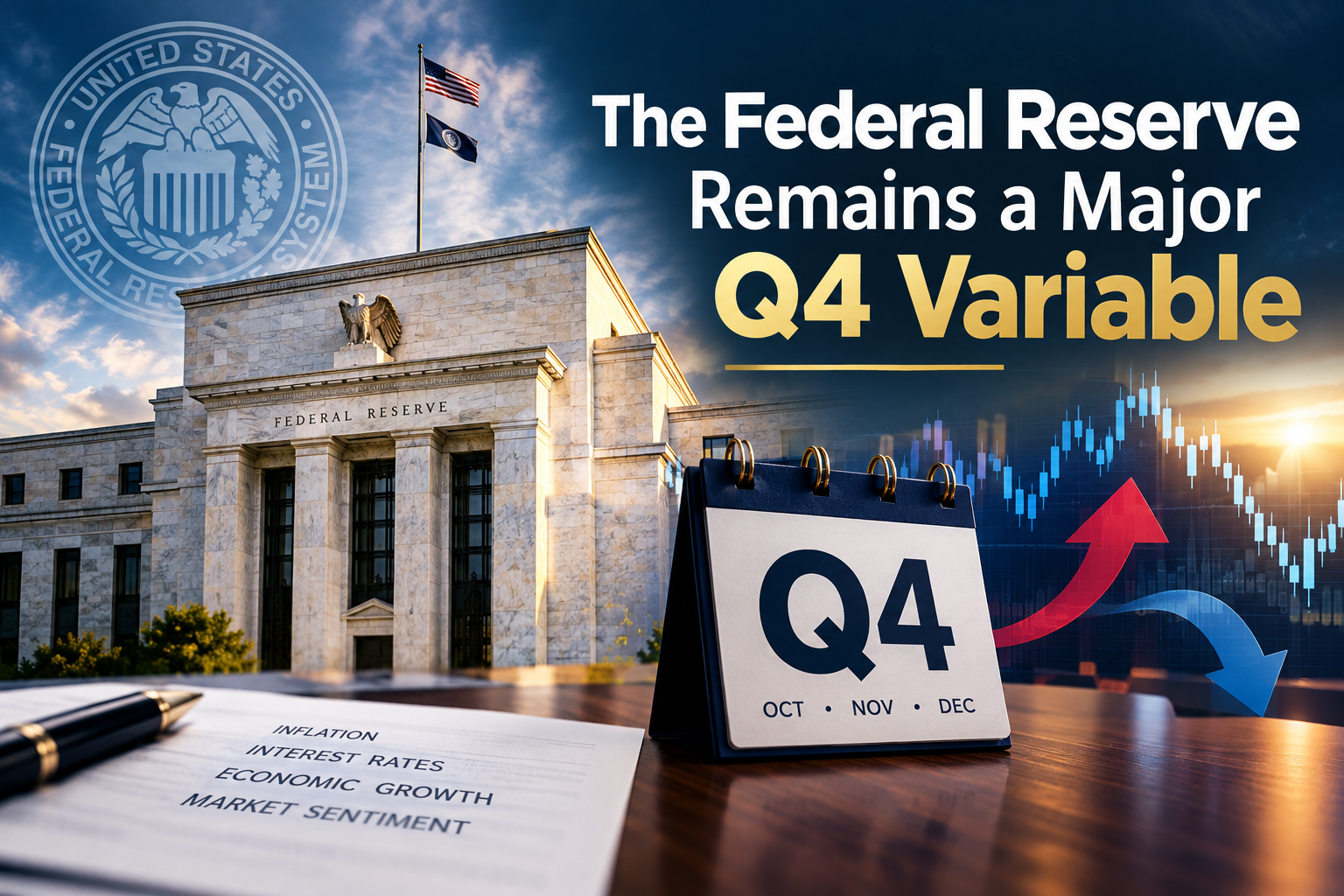
Monetary policy is likely to remain one of the most important influences on Bitcoin during the final quarter of 2026.
The relationship between Bitcoin and the Federal Reserve is not always straightforward. Lower interest rates can support risk assets by reducing borrowing costs and increasing liquidity, while higher rates can have the opposite effect. But Bitcoin’s response depends on the wider economic environment.
The latest backdrop is particularly complicated because inflation remains an important concern while Treasury yields have moved substantially higher.
CoinShares noted that U.S. economic data remained relatively strong and that officials had highlighted inflation risks. Market expectations had also shifted toward a greater possibility of another rate increase, adding to pressure across financial markets.
For Bitcoin, this means the Q4 environment may be driven less by a simple question of whether rates rise or fall and more by how monetary policy interacts with inflation, economic growth and government borrowing.
If inflation remains persistent, monetary authorities may maintain restrictive policy for longer. If economic conditions weaken significantly, expectations could shift in the opposite direction.
Both scenarios can produce substantial volatility in Bitcoin price action.
That uncertainty is one reason why the third monthly gain is noteworthy but should not be treated as evidence that the market has entered a risk-free upward trend.
Rising Treasury Yields Could Test Bitcoin’s Momentum
Bond yields represent another important Q4 risk.
The U.S. Treasury market plays a central role in global financial markets because government bonds are widely used as benchmarks for borrowing costs and asset valuations. When Treasury yields rise sharply, investors reassess the relative attractiveness of stocks, commodities, cryptocurrencies and other assets.
The 10-year Treasury yield reaching 5.12% in September represents a particularly important development. CoinShares described the level as the highest since 2007.
Bitcoin has nevertheless continued to trade well above its summer lows.
That resilience may indicate that cryptocurrency-specific demand is currently strong enough to offset some macroeconomic pressure. However, sustained high yields could become more challenging if they continue to tighten global financial conditions.
This is especially relevant because Bitcoin is no longer an isolated niche asset. Its increasing integration with traditional financial markets means movements in the dollar, Treasury bonds and institutional portfolios can influence BTC liquidity.
Consequently, Bitcoin Q4 risks cannot be understood solely by studying cryptocurrency charts. The broader bond market and monetary-policy environment will remain important parts of the picture.
Regulatory Uncertainty Is Still Part of the Bitcoin Story
Regulation is another factor that could influence cryptocurrency sentiment during Q4.
In September, the U.S. Senate failed to advance the CLARITY Act, legislation intended to establish a clearer framework for cryptocurrency market structure. CoinDesk reported that the measure received 49 votes, short of the 60 votes needed to advance.
The development introduced uncertainty for the wider cryptocurrency industry, but it did not completely close the door on regulatory progress.
The Securities and Exchange Commission subsequently announced an innovation exemption related to tokenized securities venues, creating a separate avenue for digital-asset development. CoinDesk described the development as a more constructive regulatory signal despite the legislative setback.
This distinction is important.
Bitcoin’s market does not depend on a single piece of legislation. Regulatory policy develops through legislation, agency guidance, enforcement decisions and market-structure rules.
For Q4, traders and institutions may therefore pay attention not only to Congress but also to developments from agencies such as the SEC and Commodity Futures Trading Commission.
Greater regulatory clarity could potentially reduce uncertainty for institutional participants, while unexpected restrictions or regulatory disputes could increase volatility.
Bitcoin’s Technical Picture Has Improved
The technical structure of Bitcoin has also changed considerably from the middle of the year.
Historical futures data show Bitcoin moving from closing levels around $64,000 to $65,000 in mid-August to above $84,000 by late September. The move represented a substantial recovery from the summer lows.
The $80,000 region has consequently become an important psychological area for market participants.
StoneX’s September 28 Q4 outlook noted that Bitcoin’s near-term technical bias had improved above the $80,000 level, while also pointing to renewed ETF purchases and improving investor behavior.
Technical levels, however, are not guarantees. Bitcoin can move through support and resistance zones rapidly, particularly during periods of elevated volatility.
The more meaningful question is whether the cryptocurrency can maintain higher price levels while trading volume, ETF demand and broader market participation remain supportive.
If Bitcoin continues to hold substantially above its summer lows, the structure of the market will look considerably different from the conditions seen earlier in the year. Conversely, a sharp reversal could demonstrate that the August and September rally was primarily a recovery rather than the beginning of a sustained trend.
Why Q4 Could Bring Greater Bitcoin Volatility
The fourth quarter is historically an important period for Bitcoin.
CoinDesk reported that Bitcoin has historically posted strong average Q4 performance, although historical returns are not guarantees of future results.
Seasonality can influence expectations, but it should be treated cautiously. Cryptocurrency markets are highly sensitive to unexpected events, and historical patterns can fail when macroeconomic conditions change.
Q4 2026 is already beginning with several potential sources of volatility.
The first is monetary policy. Investors must assess whether inflation and economic data encourage additional tightening or eventually support a less restrictive policy stance.
The second is the bond market. Persistently high Treasury yields could pressure risk assets and alter portfolio allocations.
The third is energy prices. Higher oil prices can contribute to inflation concerns, potentially complicating monetary policy.
The fourth is regulation. Congressional developments and agency actions could influence institutional participation in digital assets.
Finally, ETF flows remain important. Continued inflows could reinforce demand, while a reversal could remove a significant source of support.
Together, these factors mean the final quarter could be considerably more volatile even if Bitcoin begins it from a relatively strong position.
What the Third Monthly Gain Really Means
A third consecutive monthly gain would be significant from a market-structure perspective, but its importance needs to be placed in context.
First, it would demonstrate that Bitcoin has been able to maintain positive momentum through a historically challenging month.
Second, it would reinforce the recovery from the summer lows.
Third, it would indicate that buyers have remained active despite rising yields and monetary-policy uncertainty.
However, three positive months do not establish a permanent bull market.
Bitcoin remains capable of large price swings, and cryptocurrency markets can change direction quickly when liquidity conditions shift.
The more useful interpretation is that Bitcoin has entered Q4 with stronger momentum than it had earlier in the year. Whether that momentum develops into a broader trend will depend on the interaction between institutional demand, ETF flows, macroeconomic conditions, regulatory developments and market liquidity.
Bitcoin’s Institutional Market Is Becoming More Important
Another defining feature of the current Bitcoin market is the growing role of institutional participants.
Companies, funds and other professional investors can now obtain Bitcoin exposure through increasingly established financial products. The activity of large corporate holders is also becoming more visible.
Investopedia reported on September 28 that Strategy had purchased another 1,665 Bitcoin for approximately $143 million, bringing its reported holdings to 847,666 BTC.
Such purchases illustrate how corporate Bitcoin accumulation can become a meaningful part of market demand.
At the same time, institutional participation can increase the connection between Bitcoin and traditional financial markets. Large funds may respond to changing interest rates, liquidity conditions and portfolio risk in ways that differ from individual cryptocurrency investors.
That makes institutional flows an increasingly important component of Bitcoin market analysis.
The Dollar Could Also Matter for Bitcoin
The U.S. dollar is another factor worth watching during Q4.
Recent Reuters analysis reported that the dollar had gained 2.8% from its recent low by late September and had moved above its 100-week moving average before showing signs of losing momentum.
A stronger dollar can create headwinds for many dollar-priced assets because it affects global financial conditions and purchasing power.
Bitcoin’s relationship with the dollar is not fixed, but periods of dollar strength can coincide with tighter liquidity conditions.
Therefore, the direction of the dollar during Q4 could provide additional context for interpreting Bitcoin’s performance. If the dollar strengthens alongside higher Treasury yields, the combination could create a more challenging environment for risk assets. If dollar momentum weakens, financial conditions could become comparatively more supportive.
Bitcoin Enters Q4 With Momentum and Uncertainty
Bitcoin’s approach toward a third monthly gain represents a meaningful change from the difficult conditions seen earlier in 2026.
The cryptocurrency has recovered dramatically from its summer lows, attracted renewed ETF inflows and demonstrated resilience despite elevated Treasury yields and hawkish monetary-policy signals. At the same time, unresolved regulatory questions and changing global financial conditions ensure that the path forward is unlikely to be straightforward.
The key issue for Q4 is therefore not simply whether Bitcoin can continue rising. It is whether the underlying sources of demand remain strong enough to absorb macroeconomic pressure.
ETF flows, institutional accumulation, Treasury yields, Federal Reserve policy, inflation data, the U.S. dollar and cryptocurrency regulation will all contribute to that picture.
Conclusion
Bitcoin is entering the fourth quarter of 2026 with a notably stronger market structure than it had during the summer. A potential third consecutive monthly gain would underscore the cryptocurrency’s recent recovery and highlight its ability to withstand several significant macroeconomic and regulatory challenges.
Yet the same factors that make the current rally notable also create uncertainty for Q4. Rising Treasury yields, inflation concerns, Federal Reserve policy, dollar movements and regulatory developments could all produce substantial changes in market sentiment.
