

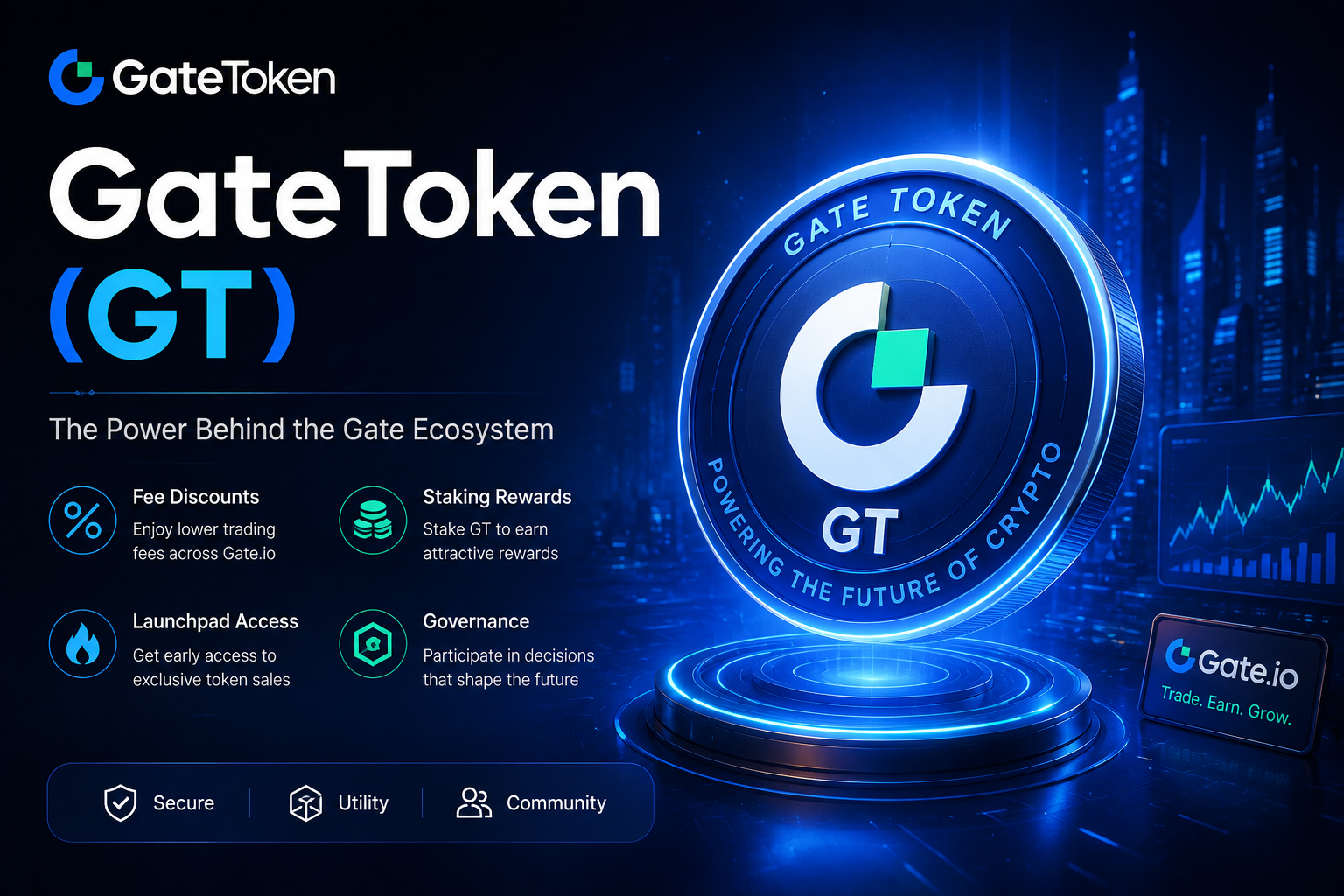

GateToken (GT) is the native cryptocurrency of the Gate ecosystem, serving as the backbone of GateChain and powering a wide range of blockchain services. Originally launched by Gate.io, one of the world’s leading cryptocurrency exchanges, GT has evolved beyond a traditional exchange token into a multifunctional digital asset that supports decentralized applications, staking, governance, and blockchain security.
As the cryptocurrency industry continues to expand, utility-focused tokens have become increasingly important. GateToken stands out because it combines the advantages of a centralized exchange token with the functionality of a blockchain-native asset. This dual-purpose design enables GT to play a significant role in both centralized finance (CeFi) and decentralized finance (DeFi).
What Is GateToken (GT)?
GateToken (GT) is the official utility token of GateChain, a public blockchain designed to facilitate secure digital asset transfers and decentralized applications. GT is also deeply integrated into the broader Gate ecosystem, including the Gate exchange, GateChain, Gate Layer, launchpads, staking programs, and governance systems.
The token was introduced to provide users with access to ecosystem benefits while supporting blockchain operations. Over time, GT has become a core component of the Gate infrastructure, helping bridge traditional crypto exchange services with Web3 applications.
History and Development of GateToken
GateChain was launched by Gate.io in 2018 with a mission to improve blockchain security and asset protection. GateToken was subsequently introduced as the native currency of the network. Since its launch, the project has focused on building a complete ecosystem that integrates trading services, decentralized applications, staking solutions, and cross-chain functionality.
The ecosystem has continued to expand through the development of Gate Layer, a Layer-2 blockchain solution designed to improve scalability and transaction efficiency. GT serves as the primary token across these infrastructures, reinforcing its importance within the network.
How GateToken Works
GateToken functions as the primary utility asset across the Gate ecosystem. Users can utilize GT for various purposes, including:
Payment of Network Fees
GT is used to pay transaction fees on GateChain and Gate Layer. Similar to how ETH powers Ethereum transactions, GT acts as the gas token for blockchain operations.
Staking and Network Security
GateChain operates using a Proof-of-Stake (PoS) consensus mechanism. Token holders can stake GT to participate in network validation and earn rewards while helping secure the blockchain.
Trading Benefits
Within the Gate exchange ecosystem, GT holders can receive fee discounts, access VIP privileges, and participate in exclusive platform promotions and launchpad events.
Governance Participation
GT holders can participate in governance activities that influence ecosystem development and blockchain decisions. This gives users a voice in shaping the future of the platform.
GateToken Tokenomics
Tokenomics plays a crucial role in determining the long-term sustainability of any cryptocurrency project.
GateToken was initially launched with a maximum supply of approximately 300 million tokens. However, one of the most notable aspects of GT is its aggressive token burn mechanism. A substantial portion of the original supply has already been permanently removed from circulation through periodic burns.
According to ecosystem reports, more than half of the original supply has been burned, reducing overall token availability and creating a deflationary economic model. This strategy helps support scarcity and potentially increases value over time as demand grows.
Current supply metrics vary slightly across data providers, but both CoinMarketCap and CoinGecko report a circulating supply of over 100 million GT tokens with a market capitalization exceeding $700 million.
Key Features of GateToken
Deflationary Burn Mechanism
One of GT’s strongest features is its continuous token-burning strategy. A portion of ecosystem revenue and network activity contributes to reducing the circulating supply, making GT a deflationary asset.
EVM Compatibility
GateChain supports Ethereum Virtual Machine (EVM) compatibility, enabling developers to deploy Ethereum-based smart contracts and decentralized applications with minimal modifications.
Fast Transactions
GateChain offers rapid transaction processing and low transaction costs, making it attractive for developers and users seeking scalable blockchain infrastructure.
Multi-Ecosystem Utility
Unlike many exchange tokens that are limited to trading benefits, GT operates across blockchain services, staking systems, governance frameworks, and decentralized applications.
Advantages of GateToken
GateToken offers several advantages that contribute to its growing popularity:
- Strong integration with the Gate ecosystem.
- Deflationary supply model.
- Utility across both CeFi and DeFi environments.
- Staking opportunities for passive rewards.
- Governance participation.
- Support for blockchain transaction fees.
- Expanding Layer-2 ecosystem through Gate Layer.
These factors help distinguish GT from many traditional exchange tokens.
Potential Risks
Like all cryptocurrencies, GateToken carries certain risks.
The token’s performance remains closely tied to the success and adoption of the broader Gate ecosystem. Regulatory developments affecting cryptocurrency exchanges could also impact demand for GT. Additionally, competition from other exchange ecosystems and blockchain platforms may influence future growth.
Investors should evaluate market conditions, ecosystem development, and risk tolerance before making investment decisions.
Future Outlook for GateToken
The future of GateToken largely depends on the continued expansion of the Gate ecosystem. As GateChain and Gate Layer attract more developers, decentralized applications, and users, demand for GT could increase significantly.
The token’s role as a gas asset, governance token, staking asset, and exchange utility token creates multiple demand drivers. Combined with ongoing token burns and ecosystem growth, GT has the potential to strengthen its position within the cryptocurrency market.
Furthermore, increasing adoption of Web3 technologies may provide additional opportunities for GateToken to expand beyond its current use cases and support a broader decentralized economy.
Conclusion
GateToken (GT) has evolved into far more than a standard exchange token. It serves as the foundation of GateChain, powers blockchain transactions, supports staking and governance, and unlocks benefits across the Gate ecosystem. Its deflationary tokenomics, growing utility, and integration with both centralized and decentralized services make it one of the more versatile digital assets in the market.
As blockchain adoption continues to grow, GateToken’s expanding ecosystem and strategic role within GateChain position it as an important project to watch in the years ahead. While risks remain, GT’s combination of utility, scarcity, and ecosystem support gives it strong long-term potential within the evolving cryptocurrency landscape.
