


Quantitative analysis plays a crucial role in modern finance by applying mathematical, statistical, and computational techniques to analyze financial markets, manage risk, and optimize investment decisions. The field has grown significantly with advancements in data science, artificial intelligence, and algorithmic trading. At the same time, the cryptocurrency industry has embraced quantitative methods to improve blockchain efficiency, interoperability, and digital asset management.
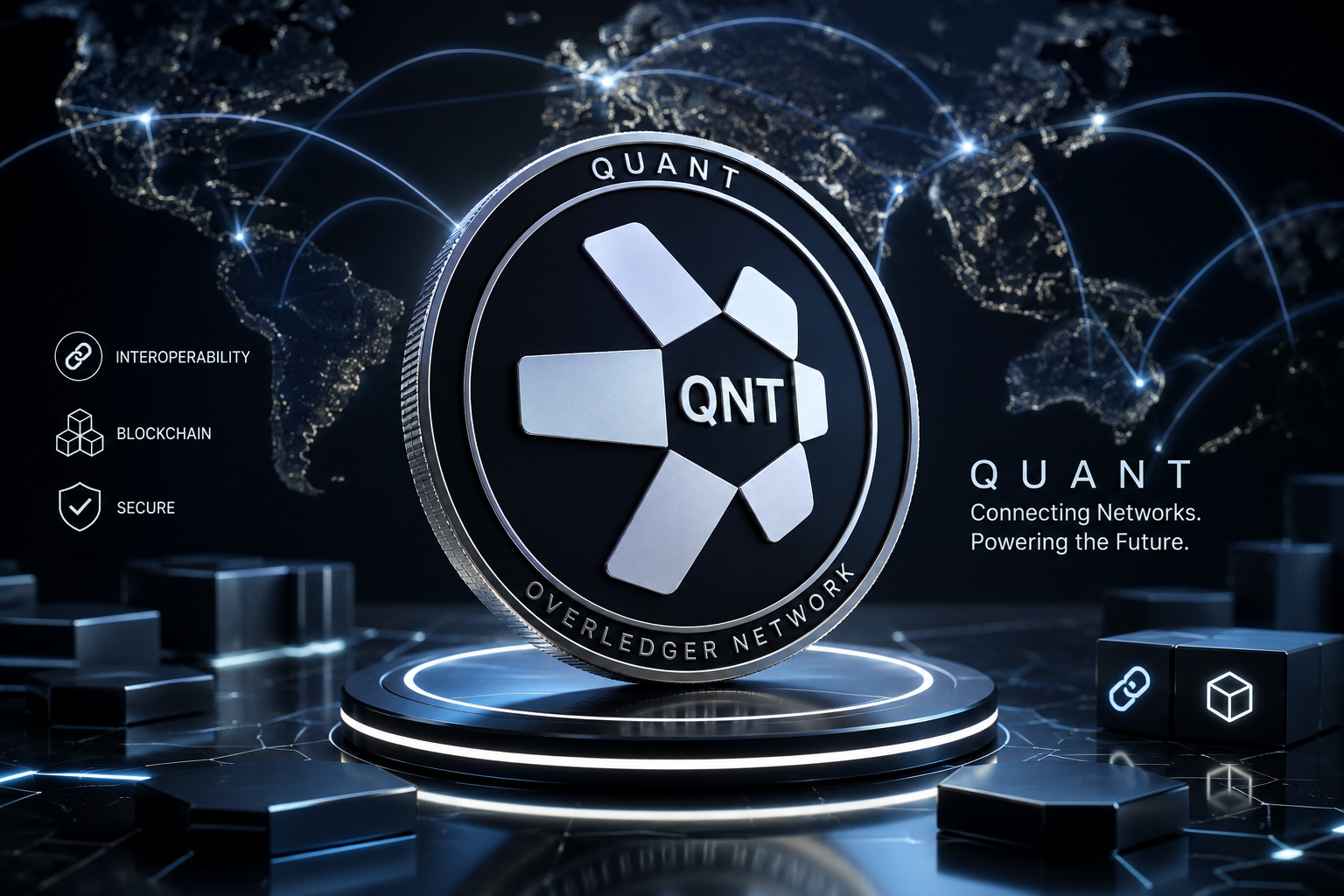
One notable cryptocurrency project associated with the term “Quant” is Quant (QNT), a blockchain interoperability platform designed to connect different distributed ledger technologies. This article explores both quantitative analysis in finance and the Quant Network ecosystem, providing a comprehensive understanding of their significance in today’s financial landscape.
What Is Quantitative Analysis in Finance?
Quantitative analysis in finance refers to the use of mathematical models, statistical techniques, and large datasets to evaluate financial markets and support investment decisions. Professionals who specialize in this field are known as quantitative analysts or “quants.” Their work involves analyzing market behavior, pricing financial instruments, managing risk, and developing trading strategies.
Unlike traditional investment approaches that rely heavily on human judgment, quantitative analysis uses objective data and mathematical calculations to identify patterns and opportunities. This data-driven approach enables financial institutions to make more informed and efficient decisions.
Core Components of Quantitative Analysis
Mathematical Modeling
Mathematical models help analysts represent complex financial systems using formulas and equations. These models are widely used for asset pricing, portfolio optimization, and derivative valuation.
Statistical Analysis
Statistics play a critical role in identifying trends, measuring relationships, and forecasting future outcomes. Techniques such as regression analysis, correlation analysis, and probability modeling allow analysts to assess market behavior and investment risk.
Data Mining and Machine Learning
Modern quantitative finance increasingly relies on data mining and machine learning algorithms to process massive datasets. These technologies help uncover hidden patterns, detect anomalies, and improve predictive accuracy in financial markets.
Risk Management
Risk management is one of the most important applications of quantitative analysis. Financial institutions use quantitative models to estimate market risk, credit risk, and operational risk while ensuring compliance with regulatory standards.
Applications of Quantitative Analysis
Portfolio Management
Investment firms use quantitative methods to construct diversified portfolios that maximize returns while minimizing risk. By analyzing correlations between assets, portfolio managers can improve overall investment performance.
Algorithmic Trading
Algorithmic trading involves using computer programs to execute trades automatically based on predefined rules and market signals. Quantitative models help identify trading opportunities and execute transactions at high speed.
Derivatives Pricing
Complex financial instruments such as options and futures require sophisticated mathematical models for accurate valuation. Quantitative analysts develop pricing models that account for volatility, interest rates, and market conditions.
Forecasting and Market Analysis
Quantitative techniques help analysts forecast future market movements by examining historical data, trends, and economic indicators. These forecasts support investment strategies and business planning.
Evolution of Quantitative Finance
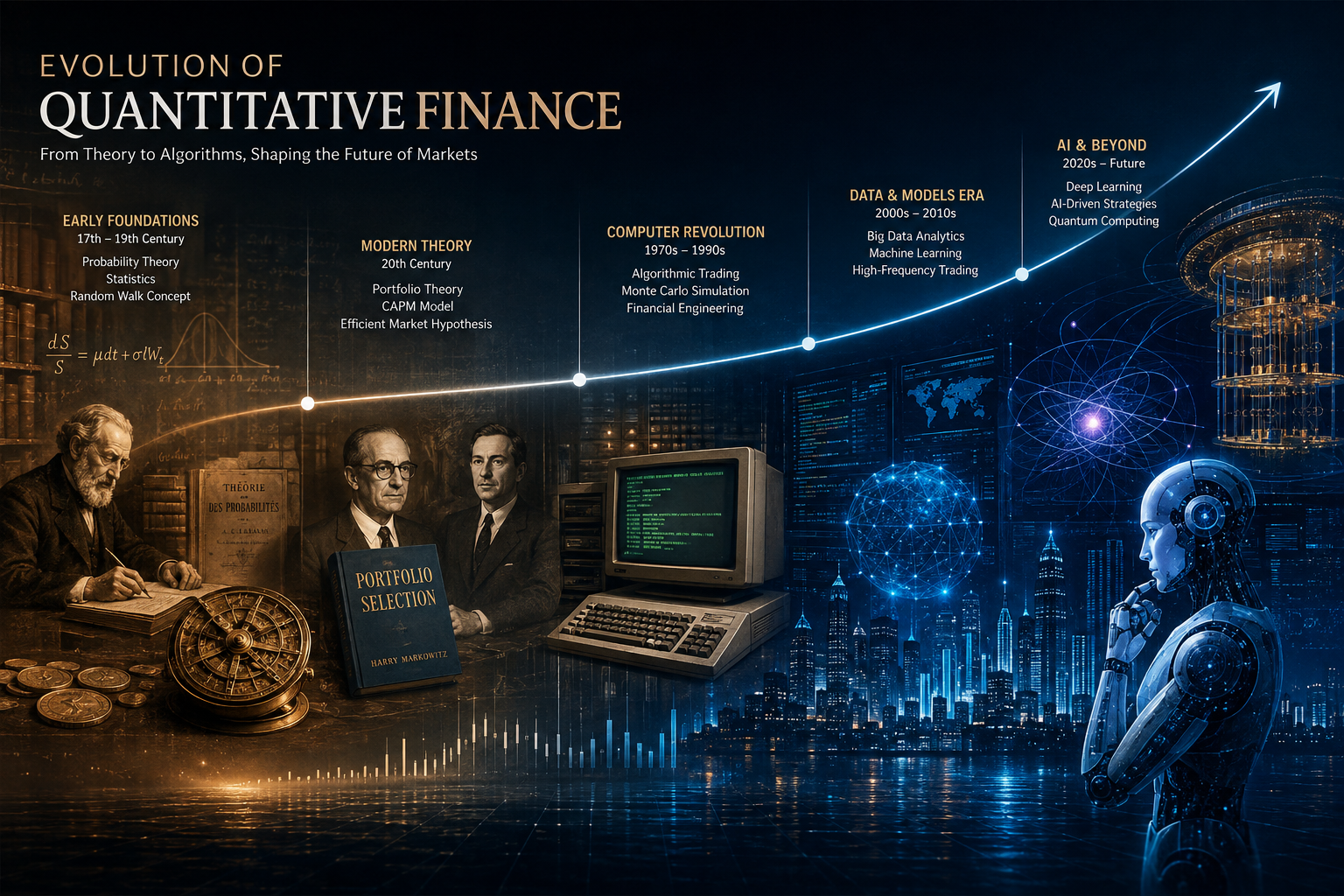
The roots of quantitative finance can be traced back to mathematical studies of financial markets and probability theory. Over time, advancements in computing power transformed quantitative analysis from a niche academic discipline into a major force in global finance. Today, hedge funds, investment banks, and asset management firms heavily rely on quantitative strategies.
The emergence of artificial intelligence and machine learning has further accelerated the evolution of quantitative finance. Modern quantitative systems can process enormous datasets, generate trading signals, and adapt to changing market conditions with minimal human intervention.
What Is Quant (QNT)?
Quant (QNT) is a blockchain-focused project launched in 2018 to address one of the industry’s biggest challenges: interoperability. Blockchain interoperability refers to the ability of different blockchain networks to communicate and exchange data efficiently. Quant aims to solve this problem through its proprietary technology called Overledger.
Unlike many blockchain projects that focus on creating a new blockchain, Quant seeks to connect existing networks. This approach allows organizations and developers to build applications that can operate across multiple blockchain ecosystems.
The Overledger Network
Overledger is often described as a blockchain operating system. It serves as a gateway that enables communication between different distributed ledger technologies without requiring those networks to change their underlying architecture.
The technology enables:
- Cross-chain communication
- Multi-chain application development
- Secure data transfer
- Enterprise blockchain integration
- Enhanced interoperability across networks
These capabilities make Overledger attractive for businesses, governments, and financial institutions seeking blockchain solutions that work across multiple ecosystems.
Role of the QNT Token
The QNT token serves as the utility token of the Quant ecosystem. It is used to access services within the Overledger Network, including gateway operations and read/write activities across connected blockchain systems.
According to CoinMarketCap, Quant has a maximum supply of approximately 14.88 million tokens, making it a relatively scarce digital asset compared to many cryptocurrencies. The token’s utility-driven design aims to support network functionality while encouraging ecosystem growth.
Quant’s Importance in the Blockchain Industry
One of the major challenges facing blockchain adoption is fragmentation. Different networks often operate independently, limiting their ability to share information and assets. Quant addresses this challenge by creating a framework that enables seamless communication across diverse blockchain platforms.
This interoperability is particularly valuable for:
- Financial institutions
- Enterprise blockchain applications
- Government digital initiatives
- Central Bank Digital Currency (CBDC) projects
- Multi-chain decentralized applications
As blockchain adoption expands globally, interoperability solutions like Quant may play a vital role in supporting connected digital ecosystems.
Future Trends
The future of quantitative finance and blockchain technology appears increasingly interconnected. Emerging technologies such as artificial intelligence, machine learning, natural language processing, and quantum computing are expected to enhance quantitative models and investment strategies.
Similarly, blockchain interoperability is becoming a critical requirement for widespread adoption. Projects like Quant are positioning themselves to provide the infrastructure necessary for seamless interaction between digital asset networks and traditional financial systems.
Conclusion
Quantitative analysis has transformed modern finance by enabling data-driven decision-making, sophisticated risk management, and advanced trading strategies. Through mathematical models, statistical methods, and emerging AI technologies, quantitative finance continues to shape the future of global markets.
At the same time, Quant (QNT) represents an innovative approach to solving blockchain interoperability challenges. Through its Overledger technology, Quant aims to connect diverse blockchain networks and facilitate efficient communication across distributed ledger systems. As finance and blockchain technologies continue to evolve, both quantitative analysis and interoperability solutions are expected to remain at the forefront of innovation.
