



The Ethereum ecosystem continues to evolve rapidly, and one of the most innovative sectors within decentralized finance (DeFi) is liquid staking and restaking. Among the leading projects in this space is Ether.fi (ETHFI), a decentralized, non-custodial liquid restaking protocol that allows users to stake Ethereum while maintaining control of their assets.
Ether.fi has gained significant attention because it combines Ethereum staking, EigenLayer restaking, and liquid staking tokens into a single ecosystem. By offering users enhanced flexibility and yield opportunities, the platform has emerged as one of the most recognized names in Ethereum staking infrastructure. According to CoinMarketCap, Ether.fi’s native governance token, ETHFI, is used for protocol governance and ecosystem development, while products such as eETH and weETH enable liquid staking and restaking functionality.
This article explores Ether.fi, its technology, ETHFI token utility, ecosystem components, benefits, risks, and future outlook.
What Is Ether.fi?
Ether.fi is a decentralized staking and restaking protocol built on Ethereum. Unlike traditional staking services, Ether.fi is designed to be non-custodial, meaning users retain greater control over their assets while participating in Ethereum validation and restaking opportunities.
The platform allows users to deposit ETH and receive liquid staking tokens that represent their staked assets. These tokens can then be used across decentralized finance applications while continuing to earn staking rewards. Ether.fi’s approach addresses one of the biggest limitations of traditional staking: locked liquidity.
The project emphasizes decentralization, security, and user ownership while integrating advanced staking infrastructure and distributed validator technologies.
How Ether.fi Works
Ether.fi operates by allowing users to stake ETH through its protocol. Once ETH is deposited, it is used for Ethereum staking and can also be restaked through EigenLayer, creating additional earning opportunities. Users receive liquid staking assets in return.
The process generally follows these steps:
ETH Deposit
Users deposit ETH into the Ether.fi protocol. The deposited assets enter a liquidity pool used to fund validators on Ethereum.
Receiving eETH
After staking, users receive eETH, a liquid staking token representing their staked ETH. eETH automatically reflects accumulated staking and restaking rewards.
Wrapped Version (weETH)
Users can convert eETH into weETH, a wrapped version designed for broader DeFi compatibility. This enables participation in lending, borrowing, liquidity pools, and other decentralized applications while retaining staking exposure.
Restaking Through EigenLayer
Ether.fi integrates with EigenLayer, allowing staked ETH to secure additional services and generate extra rewards through restaking mechanisms.
The ETHFI Token
ETHFI is the governance token of the Ether.fi ecosystem. Rather than representing staked ETH directly, ETHFI enables community participation in the protocol’s future development and decision-making processes.
Token holders can vote on important matters including:
- Protocol upgrades
- Treasury management
- Economic parameters and fee structures
- Node operator approvals
- Restaking allocations
- Governance proposals and ecosystem development strategies
These governance capabilities allow ETHFI holders to influence the long-term direction of the platform.
Key Features of Ether.fi
Non-Custodial Staking
One of Ether.fi’s primary differentiators is its non-custodial design. The protocol seeks to ensure users maintain control over their assets rather than surrendering complete custody to a centralized provider.
Liquid Restaking
Ether.fi pioneered one of the earliest liquid restaking models on Ethereum. This approach enables users to earn rewards from both staking and restaking while retaining liquidity.
Governance Participation
ETHFI holders play an active role in protocol governance, helping shape future development and treasury decisions.
DeFi Integration
Through eETH and weETH, users can interact with various DeFi applications without sacrificing staking rewards. This increases capital efficiency and utility.
Additional Rewards
Ether.fi’s restaking infrastructure enables users to earn additional rewards beyond standard Ethereum staking returns potentially.
ETHFI Staking Benefits
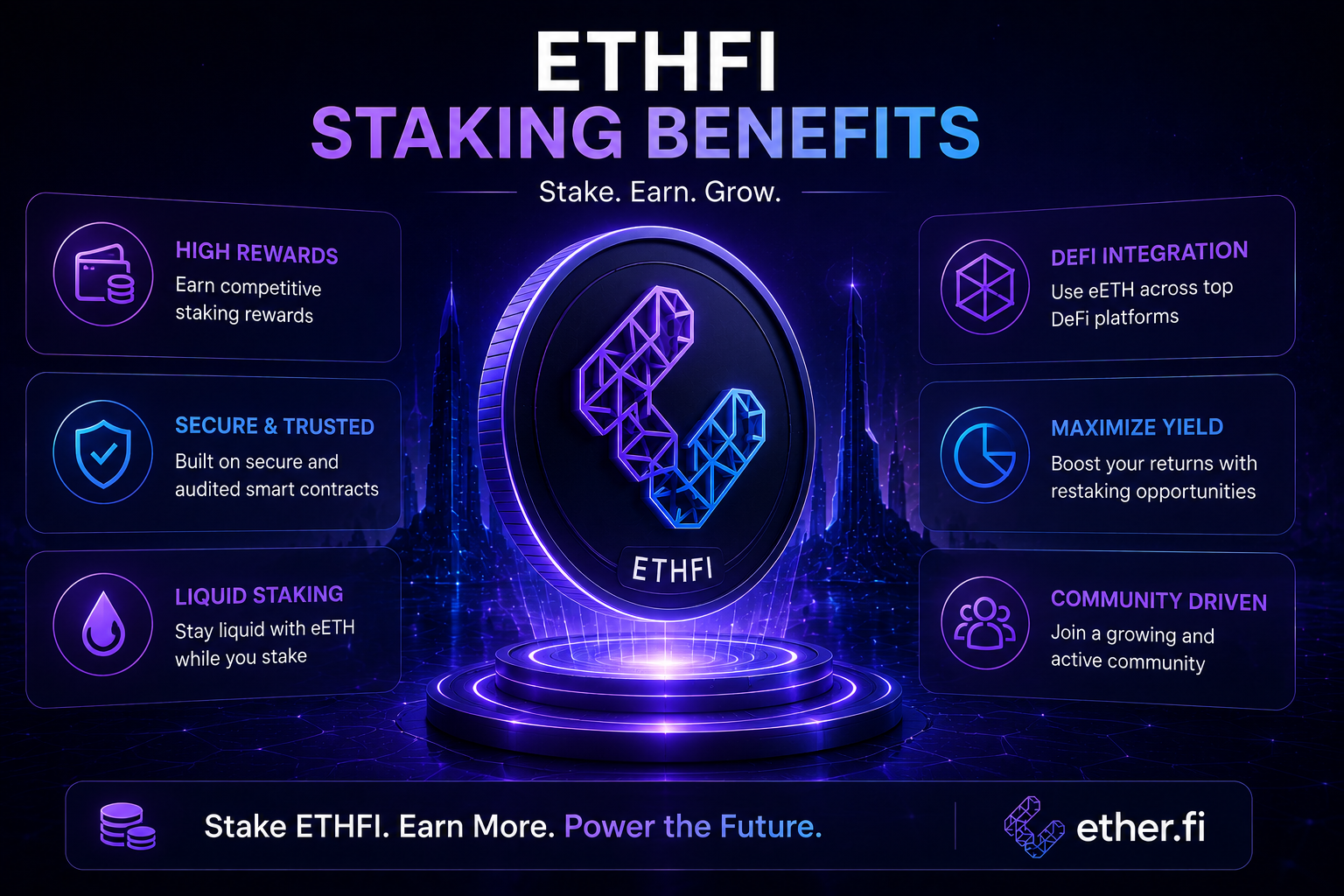
Ether.fi has expanded the utility of ETHFI through staking mechanisms. According to the official platform, users who stake ETHFI can access several ecosystem benefits. These include participation in governance, eligibility for membership tiers, monthly reward opportunities, and exposure to protocol revenue-sharing initiatives.
The platform’s membership structure introduces different levels that provide additional ecosystem advantages for long-term participants.
Ether.fi Ecosystem Components
The Ether.fi ecosystem consists of multiple interconnected products:
ETHFI
The governance token that powers community participation and protocol decision-making.
eETH
A liquid staking token that represents staked ETH while accumulating rewards.
weETH
A wrapped version of eETH designed for broader DeFi compatibility.
Ether.fi Cash
The project has expanded into broader crypto financial services, including payment and spending solutions that aim to bridge traditional finance and decentralized finance.
Market Performance of ETHFI
ETHFI entered the cryptocurrency market as the governance token for one of Ethereum’s largest liquid restaking platforms. CoinMarketCap reports that the token has a maximum supply of 1 billion ETHFI tokens and is actively traded across major cryptocurrency exchanges.
Market performance is influenced by several factors:
- Ethereum adoption
- Staking demand
- Restaking growth
- Protocol revenue
- Governance participation
- Overall DeFi market conditions
Like most cryptocurrencies, ETHFI remains subject to market volatility and investor sentiment.
Community and Governance
A major strength of Ether.fi is its emphasis on decentralized governance. Community members holding ETHFI can propose and vote on protocol improvements and strategic initiatives.
Community discussions across crypto forums frequently highlight Ether.fi’s focus on decentralization, user control, and Ethereum ecosystem growth. Many users view ETHFI as a governance-focused asset rather than a direct staking token.
Risks to Consider
While Ether.fi offers innovative staking solutions, users should understand the associated risks.
Smart Contract Risk
As a DeFi protocol, Ether.fi relies on smart contracts that could potentially contain vulnerabilities.
Market Volatility
ETHFI and related assets can experience significant price fluctuations based on market conditions.
Regulatory Uncertainty
Cryptocurrency regulations continue to evolve globally, potentially impacting staking and DeFi services.
Restaking Risks
Restaking introduces additional layers of complexity and risk beyond traditional Ethereum staking. Users should evaluate these carefully before participating.
Future Outlook for Ether.fi
The future of Ether.fi appears closely linked to the continued expansion of Ethereum staking and restaking markets. As institutional and retail adoption of staking grows, demand for liquid staking solutions may continue to increase.
Recent ecosystem developments suggest Ether.fi is evolving beyond a simple staking platform into a broader on-chain financial ecosystem that includes staking, payments, lending, and yield-generating products. This diversification could strengthen the protocol’s long-term position within the DeFi sector.
The combination of non-custodial staking, liquid restaking, governance participation, and expanding financial services positions Ether.fi as one of the more ambitious projects in Ethereum’s staking landscape.
Conclusion
Ether.fi has established itself as a leading player in Ethereum’s liquid restaking ecosystem by providing users with non-custodial staking solutions, liquid staking assets, and governance participation through the ETHFI token. The protocol’s integration of Ethereum staking, EigenLayer restaking, eETH, and weETH creates a flexible ecosystem that aims to maximize capital efficiency while preserving decentralization.
As Ethereum staking adoption continues to grow, Ether.fi’s innovative approach may play an increasingly important role in the future of decentralized finance. However, investors should always conduct independent research and carefully assess the risks associated with cryptocurrency investments before making financial decisions.
